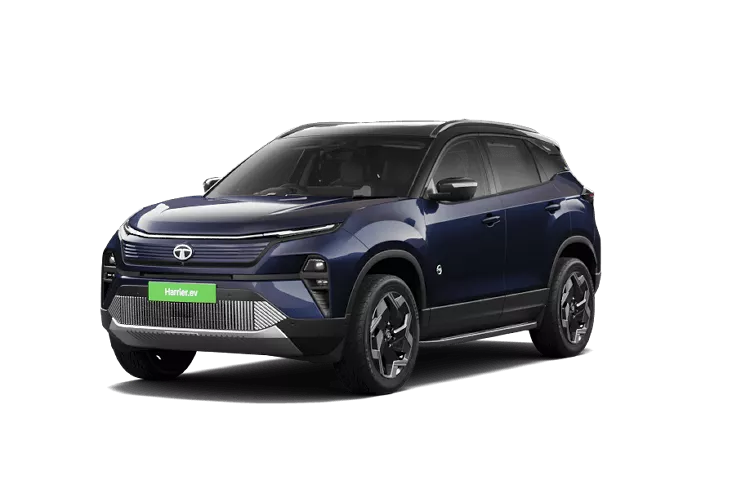
When Tata Motors first showcased the Harrier.ev concept, the Indian automotive community held its breath. The Harrier has always been the “Boss” of the road—a vehicle defined by its OMEGARC pedigree and imposing presence. Now, in 2026, the legend has officially gone electric.
Built on the cutting-edge acti.ev+ architecture, the Harrier.ev is not just a powertrain swap; it is a ground-up re-engineering of India’s most loved premium SUV. In this 2000+ word deep dive, we explore every bolt, circuit, and software line that makes the Harrier.ev a game-changer.
1. The Foundation: acti.ev+ Architecture
The Harrier.ev is the flagship bearer of the acti.ev+ (Advanced Connected Tech-Intelligent Electric Vehicle) platform. Unlike the converted internal combustion engine (ICE) platforms of the past, acti.ev+ is a dedicated “Born Electric” philosophy.
Key Structural Benefits:
- Flat Floor Design: By moving the battery pack to the floor, Tata has eliminated the central transmission tunnel, creating a massive amount of legroom and a completely flat floor for rear passengers.
- Battery as a Structural Member: The battery pack is integrated into the chassis, increasing torsional rigidity and improving safety during side impacts.
- Frunk Capacity: For the first time, the Harrier offers front storage. The RWD variants boast a 67-litre frunk, while the AWD versions provide a 37-litre space due to the addition of the front motor.
2. Performance: AWD Returns to the Harrier
For years, fans clamored for an All-Wheel Drive (AWD) Harrier. Tata has delivered this via a sophisticated Quad Wheel Drive (QWD) dual-motor setup.
The Power Stats
The top-spec Harrier.ev is a performance monster. It features two motors:
- Front Motor: Delivering 158 PS (116 kW).
- Rear Motor: Delivering 238 PS (175 kW).
- Combined Output: A staggering 313 hp and 504 Nm of torque.
This allows the Harrier.ev to sprint from 0 to 100 km/h in just 6.3 seconds. For context, that puts it in the territory of luxury European sports sedans.
Terrain Mode Mastery
To justify the “SUV” badge, Tata has equipped the QWD variants with 6 dedicated Terrain Response Modes:
- Normal: For daily city and highway commutes.
- Sand: Optimizes torque to prevent sinking in soft surfaces.
- Mud Ruts: Manages wheel slip to maintain momentum.
- Snow/Grass: Provides gentle power delivery to avoid loss of traction.
- Rock Crawl: Uses high-torque, low-speed calibration for technical climbs.
- Custom: Allows the driver to tweak steering and motor response.
3. Battery, Range, and Charging
Tata offers two battery configurations to cater to different budget and range requirements. Both use high-density Lithium-Iron-Phosphate (LFP) cells, which are better suited for the high temperatures of the Indian subcontinent.
Battery Options
| Feature | 65 kWh Battery Pack | 75 kWh Battery Pack |
| MIDC Certified Range | ~538 km | ~622 km (RWD) / ~627 km (AWD) |
| Real-World Range (Est.) | 380 – 410 km | 450 – 490 km |
| Drivetrain | RWD Only | RWD & AWD |
Charging Technology
The Harrier.ev supports ultra-fast charging to ensure minimal downtime on long road trips.
- 120 kW DC Fast Charging: Adds 250 km of range in just 15 minutes. A 20% to 80% charge takes approximately 25 minutes.
- 7.2 kW AC Home Charging: A full 10% to 100% charge takes about 10.7 hours (ideal for overnight charging).
- V2L (Vehicle-to-Load): Your car can output up to 3.3 kVA, enough to power a laptop, a coffee machine, or even a small campsite setup.
- V2V (Vehicle-to-Vehicle): In an industry-first, the Harrier.ev can charge another compatible EV at 5 kVA, acting as a mobile rescue unit.
4. Design: The “Boss” Evolves
Visually, the Harrier.ev is an evolution of the ‘Endless Edge’ design language.
Exterior Highlights
- Bi-LED Projector Headlamps: These offer a wider beam and “Welcome & Goodbye” animations.
- Aero-Inserts: The 19-inch alloy wheels feature unique plastic inserts that reduce air turbulence, adding roughly 10-15 km to the total range.
- Stealth Edition: For those who want a more aggressive look, the Stealth Black variant features a matte finish, blackened logos, and dark-chrome accents.
Interior & Comfort
The cabin is a “Zenith Suite” of luxury.
- Samsung Neo QLED Display: A world-first 14.53-inch infotainment screen that offers 4K-like clarity even under direct sunlight.
- Acoustics: A 10-speaker JBL Black Audio System with Dolby Atmos 5.1 provides a theater-like experience.
- Powered Boss Mode: With a single touch, the front co-passenger seat slides forward, giving the rear-left passenger “Lounge Class” legroom.
- Ventilation: Both front seats are ventilated, a must-have for Indian summers.
5. Intelligence: A Software-Defined Vehicle (SDV)
Tata claims the Harrier.ev is powered by over 500 million lines of code. This software backbone allows for features that feel like science fiction.
e-Valet & Summon Mode
The Harrier.ev can literally park itself. Using Auto Park Assist, the car can navigate into parallel, perpendicular, or even angled spots. If the spot is too tight for you to open the door, you can stand outside and use the Summon Mode on your smartphone to bring the car out of the parking space to your feet.
Level 2 ADAS (Advanced Driver Assistance System)
Equipped with Mobileye EyeQ technology, the Harrier.ev features over 20 ADAS functions:
- Adaptive Cruise Control with Stop & Go.
- Autonomous Emergency Braking (Pedestrian & Cyclist).
- Lane Change Alert & Lane Keep Assist.
- Traffic Sign Recognition.
- Rear Collision Warning.
6. Safety: The 5-Star Fortress
Tata Motors has built its reputation on safety, and the Harrier.ev is no exception. It is designed to exceed Bharat NCAP (BNCAP) 5-Star protocols.
- 7 Airbags: Including a driver-side knee airbag.
- 540° Surround View: This includes a “Transparent Mode” that allows the driver to see “through” the car’s floor to navigate over obstacles or potholes.
- HD Digital IRVM: The interior rearview mirror is a screen connected to a shark-fin mounted camera, ensuring a clear view even if the boot is packed to the roof.
7. Variant-wise Pricing & Value Propositon
Tata has launched the Harrier.ev with a massive range of 18 variants to ensure there is a price point for everyone.
| Variant Category | Key Features | Starting Price (Ex-Showroom) |
| Adventure | 65kWh, 10.25″ Screen, RWD | ₹21.49 Lakh |
| Fearless+ | 75kWh, 12.3″ Screen, ADAS | ₹24.99 Lakh |
| Fearless+ QWD | 75kWh, AWD, Terrain Modes | ₹26.49 Lakh |
| Empowered | 75kWh, Neo QLED, V2L/V2V | ₹27.49 Lakh |
| Empowered QWD | 75kWh, AWD, Stealth Finish | ₹28.99 Lakh |
8. Carzovo’s Final Verdict
The Tata Harrier.ev isn’t just a win for Tata Motors; it’s a win for the Indian automotive industry. It proves that a homegrown brand can produce a vehicle that rivals global giants in technology, performance, and safety.
Pros:
- Brutal performance (0-100 in 6.3s).
- Genuine AWD capability with 6 terrain modes.
- World-class infotainment and tech (Summon Mode, V2L).
- Confidence-inspiring lifetime battery warranty.
Cons:
- 7.2 kW AC Home Charger is an optional extra (₹49,000).
- Top variants cross the ₹30 Lakh mark on-road.
Who should buy it? If you are looking for a premium SUV that makes no compromises on road presence, is capable of long-distance touring, and offers the lowest running cost in its segment, the Harrier.ev is the new gold standard.
Stay tuned to Carzovo.com for our upcoming head-to-head battle: Tata Harrier.ev vs. Mahindra XEV 9e. Who will win the war of the Indian Electric Titans?