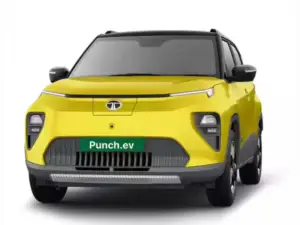
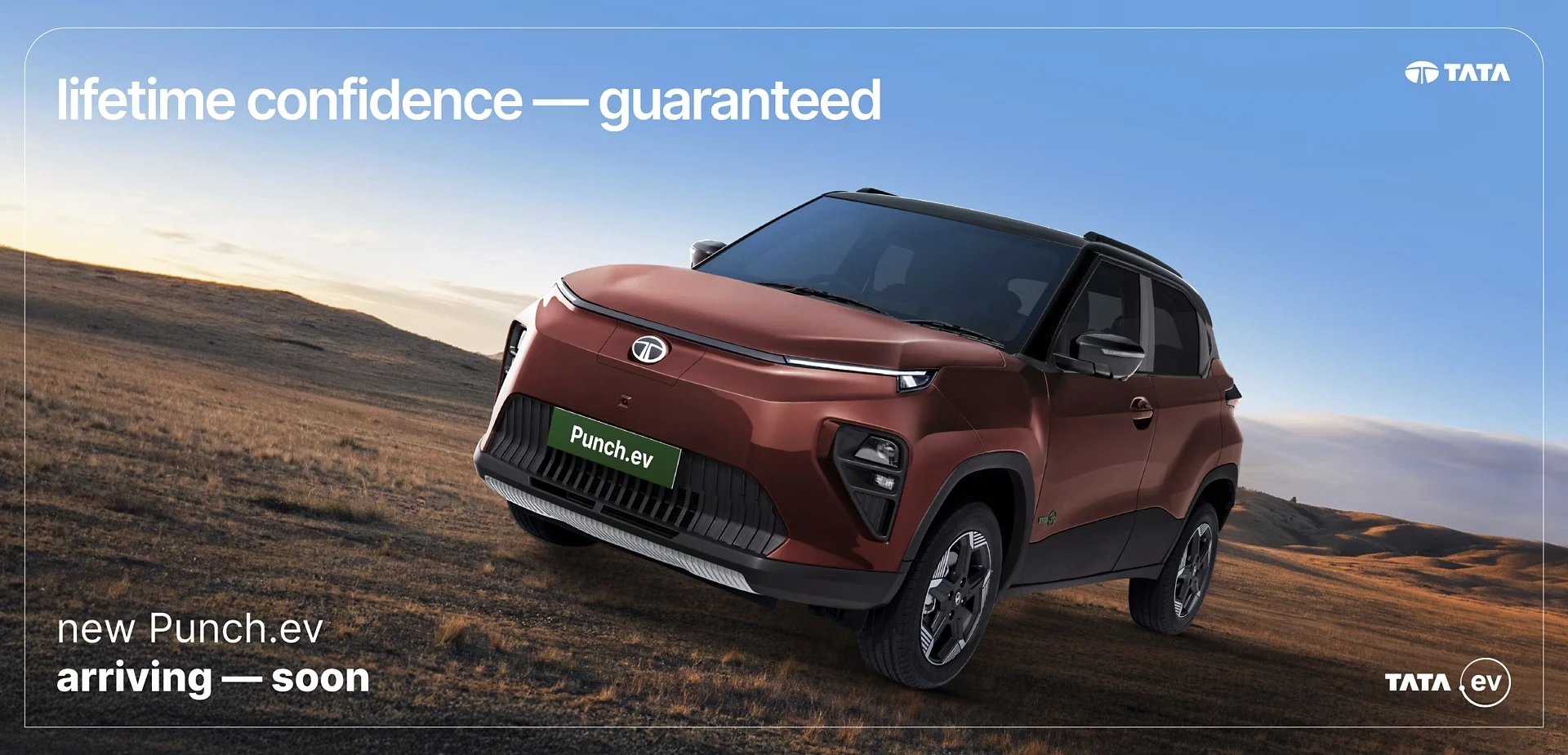
The Tata Punch EV facelift is officially set to launch on 20 February, and ahead of its market debut, Tata Motors has revealed key design updates of the electric micro-SUV. Unlike a full model change, this facelift focuses on styling revisions, while retaining the Punch EV’s existing powertrain, range figures, and core strengths.
With rising competition in the affordable electric car space, Tata aims to keep the Punch EV visually fresh and aligned with its evolving EV design language.
Tata Punch EV Facelift Front Design: Major Visual Changes Introduced
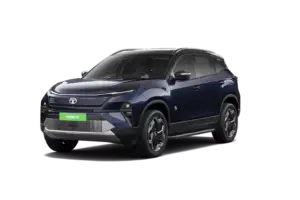
The biggest update on the Tata Punch EV facelift is at the front end. The earlier model featured headlamps connected via a black plastic panel, which has now been removed. In the facelifted version, the headlight clusters are visually separated, giving the front a sharper and more upright appearance.
Another notable change is the absence of a connected LED DRL strip. The outgoing Punch EV had a full-width DRL layout, but the facelift moves away from that design, opting for a more segmented lighting setup. While the new fascia draws inspiration from Tata’s upcoming EVs, especially the Harrier EV, the overall look may divide opinions due to its bold and unconventional styling.
Side Profile: Familiar and Unchanged
From the side, the Tata Punch EV facelift remains unchanged, carrying forward the same rugged proportions that define the model. The micro-SUV continues to feature chunky black body cladding, prominent wheel-arch extensions, and ORVM-mounted turn indicators.
This decision helps retain the Punch EV’s tough and practical character, which has been well received by urban buyers looking for a compact yet SUV-like electric car.
Rear Design: Connected Tail Lamps Expected
While Tata has not fully revealed the rear section yet, the Punch EV facelift is expected to feature a connected tail-lamp setup, similar to the updated ICE Punch. This design update should give the rear a more modern appearance and bring visual consistency across Tata’s Punch lineup.
Apart from the lighting upgrade, the rear bumper and tailgate design are likely to remain largely unchanged.
Tata Punch EV Facelift Interior: Modern Layout Continues
The cabin of the Tata Punch EV already follows Tata’s latest interior design philosophy, and the facelift is expected to carry over the existing setup without major alterations.
Key interior highlights expected to continue include a large touchscreen infotainment system, a fully digital instrument cluster, wireless phone charging, capacitive HVAC controls, and a dual-tone cabin theme. Overall, the Punch EV facelift maintains a tech-focused and contemporary interior, which remains competitive for its segment.
Battery, Motor & Range: No Mechanical Changes
Mechanically, the Tata Punch EV facelift is expected to remain unchanged, continuing with the same battery and motor options as the current model.
The smaller battery pack is rated at 25kWh, paired with an electric motor producing 80bhp and 114Nm, offering a claimed driving range of 315km. The larger battery option is a 35kWh unit, producing 121bhp and 190Nm, with a claimed range of 421km on a single charge.
These figures keep the Punch EV among the most practical electric options in its price segment, especially for city-focused usage.
Tata Punch EV Facelift Launch Timeline
The Tata Punch EV facelift will officially launch on 20 February. Pricing is expected to remain close to the outgoing model, with a marginal increase possible due to the refreshed exterior styling.
Is the Tata Punch EV Facelift Similar to the New Punch ICE Facelift Design?
The Tata Punch EV facelift does not look identical to the new ICE Punch facelift variants such as Command or Command+. While both models follow Tata’s newer design direction, the EV version features distinct front-end styling elements.
The Punch EV’s separated headlamp design, revised lighting layout, and EV-specific fascia give it a different visual identity compared to the ICE Punch facelift. In short, both cars share the same design philosophy, but the execution is clearly different.