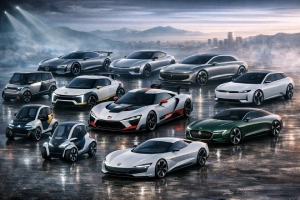
Introducing New Concept Cars-
The automotive world thrives on imagination, and concept cars are where that imagination takes physical form. December 2025 proved to be a defining month for futuristic automotive design, with manufacturers unveiling bold concepts that preview the next decade of mobility. These concept cars are not just design experiments; they are rolling laboratories showcasing upcoming technologies, new powertrain philosophies, advanced materials, and radical approaches to mobility.
From high-performance electric grand tourers to ultra-compact urban mobility solutions, the concept cars of December 2025 reveal how manufacturers are preparing for an era dominated by electrification, software-defined vehicles, sustainability, and autonomous capabilities.
Here is a detailed look at the Top 10 New Concept Cars of December 2025, each representing a unique vision of the automotive future.
1. Toyota GR GT Concept
Toyota’s GR GT Concept stands as one of the most talked-about performance concepts of 2025. Developed under Toyota’s Gazoo Racing division, this concept signals the brand’s serious intent to redefine its high-performance lineup in the electrified era.
Visually, the GR GT Concept features a low-slung grand tourer stance with a long bonnet, wide haunches, and aggressive aerodynamic elements. The design balances elegance with motorsport aggression, making it equally suitable for long-distance touring and track-focused performance.
Under the skin, the GR GT Concept is believed to explore a next-generation hybrid powertrain that combines high-output electric motors with an advanced internal combustion engine. The focus is not just outright speed but also precise handling, optimal weight distribution, and reduced emissions.
Inside, the cabin follows a driver-centric layout with a digital cockpit inspired by endurance racing cars. Lightweight materials, sustainable upholstery, and minimalist controls underline Toyota’s commitment to blending performance with responsibility.
The GR GT Concept represents Toyota’s future vision for performance enthusiasts who demand excitement without compromising sustainability.
2. Mercedes-AMG Concept GT XX
Mercedes-AMG’s Concept GT XX is a bold declaration that electric performance can surpass traditional combustion engines. Designed as a fully electric hyper-performance concept, it showcases what AMG believes the future of high-performance luxury should look like.
The exterior design is sculpted for aerodynamic efficiency, featuring active aero elements, ultra-slim LED lighting, and a wide, aggressive stance. Every curve serves a functional purpose, contributing to stability and cooling at high speeds.
Performance is the highlight of the Concept GT XX. The electric drivetrain is engineered for extreme power output, rapid acceleration, and sustained high-speed performance. Advanced battery cooling technology and high-density energy storage systems ensure consistent output even under demanding conditions.
Inside, the cabin combines futuristic digital interfaces with traditional AMG craftsmanship. Large curved displays, AI-assisted driving systems, and premium materials create an immersive driving environment.
The AMG Concept GT XX demonstrates that electric vehicles can deliver emotion, sound simulation, and driving engagement comparable to — or even exceeding — traditional AMG performance cars.
3. Honda 0 Saloon Concept
The Honda 0 Saloon Concept represents a radical departure from conventional sedan design. Built on Honda’s next-generation EV platform, this concept focuses on simplicity, efficiency, and intelligent mobility.
The exterior features clean lines, a low aerodynamic profile, and a minimalist front fascia devoid of traditional grilles. The overall silhouette prioritizes airflow efficiency, resulting in improved range and reduced energy consumption.
Inside, the cabin is designed as a “digital living space.” Physical buttons are minimized, replaced by intuitive touch surfaces, voice control, and AI-driven personalization. The dashboard stretches across the width of the cabin, providing essential information without overwhelming the driver.
The Honda 0 Saloon emphasizes lightweight construction and compact packaging, proving that electric sedans can be both spacious and efficient. Advanced driver-assistance systems and over-the-air software updates form the backbone of its intelligent architecture.
This concept reflects Honda’s belief that the future of mobility lies in simplicity, smart technology, and human-centric design.
4. Honda 0 SUV Concept
Complementing the 0 Saloon, the Honda 0 SUV Concept brings the same design philosophy into a more versatile body style. Designed for global markets, this concept targets families and urban explorers seeking practicality without sacrificing innovation.
The exterior design is boxy yet aerodynamic, blending SUV ruggedness with EV efficiency. Short overhangs and a long wheelbase maximize interior space while maintaining a compact footprint suitable for city driving.
Inside, the cabin offers modular seating arrangements, flat flooring, and extensive storage solutions. The digital interface adapts based on driving conditions, passenger needs, and navigation requirements.
The electric powertrain is optimized for range, reliability, and smooth performance rather than outright speed. Advanced safety systems, including predictive collision avoidance and adaptive cruise technologies, underline Honda’s commitment to safety.
The 0 SUV Concept showcases how electric SUVs can be practical, efficient, and future-ready without becoming overly complex.
5. Audi Concept C
Audi’s Concept C reimagines the modern electric coupe with a strong emphasis on design purity and driving pleasure. It reflects Audi’s evolving design language, blending sharp edges with smooth surfaces.
The low roofline, wide stance, and frameless doors give the Concept C a sporty yet sophisticated appearance. The lighting signature plays a key role, with advanced LED and laser technologies creating a distinct visual identity.
Inside, the cabin is minimalist yet luxurious. Audi focuses on reducing visual clutter while enhancing the driving experience through intuitive controls and immersive digital displays. The use of sustainable materials reinforces Audi’s commitment to environmentally conscious design.
Performance-wise, the Concept C is expected to feature a dual-motor electric setup, delivering balanced power distribution and precise handling. Advanced chassis tuning ensures agility without compromising comfort.
The Audi Concept C demonstrates how future electric coupes can remain emotionally engaging while embracing new technologies.
6. Renault Filante Concept
The Renault Filante Concept is a tribute to speed, efficiency, and lightweight engineering. Inspired by aviation and land-speed-record vehicles, it represents Renault’s experimental approach to electric mobility.
The exterior design is narrow, elongated, and highly aerodynamic. Every component is optimized to reduce drag, making the Filante one of the most visually striking concepts of 2025.
Inside, the cabin is stripped down to essentials. The driver sits in a central position, surrounded by lightweight materials and digital instrumentation. Traditional comfort features are sacrificed in favor of efficiency and performance.
The electric drivetrain focuses on maximizing energy efficiency rather than raw power. Advanced battery technology, combined with lightweight construction, allows the Filante to achieve exceptional range and performance metrics.
The Renault Filante Concept serves as a research platform, influencing future Renault EVs with lessons in aerodynamics and energy management.
7. Peugeot Polygon Concept
The Peugeot Polygon Concept explores the future of urban mobility through radical design and compact dimensions. It challenges conventional ideas of what a car should be in crowded cities.
The exterior design is geometric and unconventional, emphasizing visibility, maneuverability, and compactness. Short wheelbases and tight turning radii make it ideal for dense urban environments.
Inside, the cabin features a flexible seating arrangement and a minimalist control layout. Steering is reimagined through innovative control interfaces, potentially eliminating traditional steering wheels.
The electric powertrain is optimized for short trips, offering sufficient range for daily commuting while minimizing energy consumption. Sustainability is a core focus, with recycled and renewable materials used extensively.
The Polygon Concept highlights Peugeot’s vision of future cities dominated by compact, efficient, and intelligent vehicles.
8. Bentley EXP 15 Concept
Luxury meets electrification in the Bentley EXP 15 Concept. This concept explores how Bentley’s iconic craftsmanship can evolve in an electric future.
The exterior design retains Bentley’s signature proportions while incorporating modern aerodynamic elements. A bold grille reinterpretation, flowing lines, and elegant lighting define its presence.
Inside, the cabin is a showcase of luxury and technology. Hand-crafted materials coexist with advanced digital interfaces, offering a seamless blend of tradition and innovation.
The electric powertrain focuses on smooth, effortless performance rather than aggressive acceleration. Silent operation enhances the sense of luxury, while advanced suspension systems ensure unmatched ride comfort.
The EXP 15 Concept proves that electrification does not mean sacrificing luxury or brand identity.
9. Mercedes-Benz Vision Iconic Concept
The Mercedes-Benz Vision Iconic Concept pays homage to the brand’s rich heritage while looking firmly toward the future. It blends classic design cues with modern technology.
The exterior features long proportions, elegant curves, and a commanding presence. Design elements inspired by historic Mercedes models are subtly integrated into a futuristic form.
Inside, the cabin emphasizes comfort, space, and digital sophistication. Advanced autonomous features allow the vehicle to operate as a luxury lounge when needed.
The electric powertrain delivers smooth, refined performance, aligning with Mercedes’ focus on comfort and prestige.
The Vision Iconic Concept reflects Mercedes-Benz’s belief that the future of luxury lies in emotional design and advanced technology.
10. Citroën ELO Concept
The Citroën ELO Concept redefines small car design with a focus on creativity, comfort, and sustainability. It represents Citroën’s playful approach to future mobility.
The exterior is compact yet expressive, featuring bold shapes and unique proportions. Its design challenges the notion that small cars must be boring or purely functional.
Inside, the cabin emphasizes comfort and usability. Innovative seating solutions, soft materials, and intuitive controls create a welcoming environment.
The electric powertrain is designed for urban use, offering adequate range and easy charging solutions. Lightweight construction ensures efficiency and agility.
The ELO Concept highlights Citroën’s commitment to making future mobility accessible, comfortable, and enjoyable.
Final Thoughts: What Concept Cars of December 2025 Tell Us
The concept cars unveiled in December 2025 reveal clear trends shaping the automotive future. Electrification is no longer experimental — it is the foundation. Design is becoming more purposeful, blending aerodynamics with brand identity. Interiors are evolving into digital, human-centric spaces rather than traditional cockpits.
Most importantly, these concepts show that the future of cars will not follow a single formula. Performance, luxury, sustainability, and urban mobility will coexist, each tailored to specific lifestyles and needs.
Concept cars may not reach production unchanged, but their ideas, technologies, and philosophies will shape the vehicles we drive in the coming decade. December 2025 stands as a milestone moment, offering a fascinating glimpse into the future of mobility.