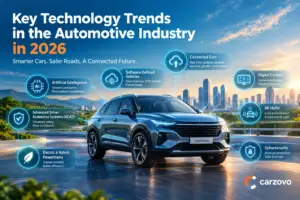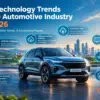
The automotive industry in 2025 looks very different from what it was a decade ago. Cars are no longer just machines designed to move people from one place to another. They are becoming intelligent, connected, and software-driven vehicles that can communicate, assist, learn, and continuously improve through updates.
The biggest story of 2025 is not a single engine or a single model launch. The real transformation is the shift from mechanical engineering to digital mobility. Modern cars now combine hardware, software, sensors, connectivity, and artificial intelligence to create a smarter driving experience.
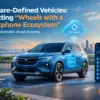
For buyers, this means a car is increasingly behaving like a smartphone on wheels. Features that once appeared only in luxury vehicles are now becoming common across compact SUVs, sedans, and even entry-level cars.
The Rise of Connected Cars
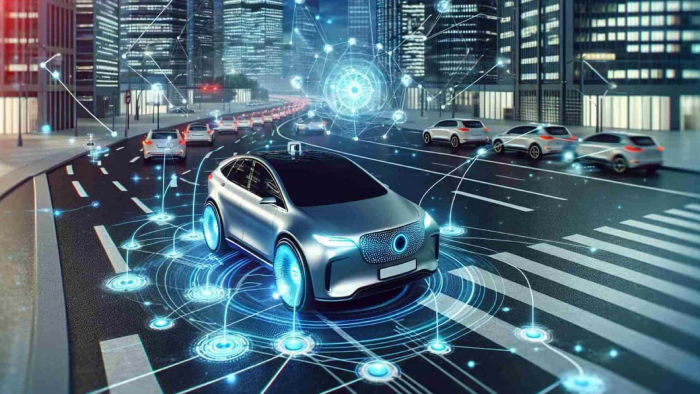
Connectivity has become one of the most important features in 2025. Most new cars now come equipped with built-in internet connectivity, remote monitoring, and smartphone integration.
Drivers can check fuel level, battery status, location, and service alerts directly from a mobile app. Many vehicles also support remote locking, climate control, and live navigation updates.
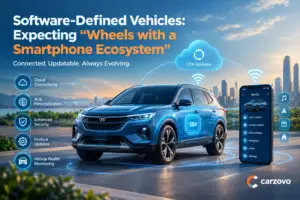
This shift changes the ownership experience. Instead of visiting a workshop for every software improvement, many vehicles now receive over-the-air (OTA) updates, allowing manufacturers to add features, improve performance, and fix bugs remotely.

Cars Are Becoming Software-Driven
In the past, most automotive innovation focused on engines, transmissions, and suspension systems. In 2025, software is becoming equally important.
Manufacturers are investing heavily in operating systems, cloud services, and digital ecosystems. The touchscreen is no longer just an entertainment device; it controls navigation, climate, driving modes, safety settings, and connected services.
Some vehicles can even personalize settings automatically based on the driver. Seat position, climate preference, music choices, and navigation history can be linked to a user profile.
This software-first approach allows cars to evolve after purchase, something traditional mechanical vehicles could never do.
Advanced Driver Assistance Is Now Mainstream
One of the most noticeable changes in 2025 is the widespread availability of Advanced Driver Assistance Systems (ADAS).
Features such as adaptive cruise control, lane-keeping assistance, automatic emergency braking, blind-spot monitoring, and traffic sign recognition are appearing in more affordable vehicles.
These systems do not make a car fully autonomous, but they significantly reduce driver fatigue and improve safety. Long highway journeys become less stressful, and urban driving becomes more manageable.
The focus has shifted from simply protecting occupants during a crash to helping prevent accidents before they happen.
Electric Vehicles Continue to Grow
Electric mobility is another major theme of 2025. Battery technology has improved, charging networks are expanding, and buyers have more EV options than ever before.
Modern electric cars offer better range, quicker charging, and lower running costs. Many manufacturers are launching electric SUVs, sedans, and compact cars aimed at mainstream buyers.
What is interesting is that EVs naturally accelerate the shift toward smart cars. Since electric vehicles are heavily software-controlled, manufacturers can integrate advanced connectivity, energy management, and digital services more easily.
Artificial Intelligence Inside the Cabin
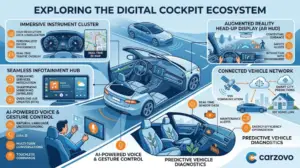
Voice assistants inside cars have become much more capable in 2025. Instead of simple command recognition, newer systems can understand conversational requests.
Drivers can ask the car to find charging stations, adjust cabin temperature, navigate to a destination, or play music without touching the screen.
AI is also being used for driver monitoring. Some vehicles can detect signs of fatigue, distraction, or reduced attention and provide warnings when necessary.
This creates a cabin that feels less like a traditional dashboard and more like an intelligent digital workspace.

Safety Has Become More Intelligent
Traditional safety focused on airbags, seat belts, and strong body structures. Those remain important, but 2025 adds another layer: predictive safety.
Modern vehicles use cameras, radar, and sensors to monitor the road continuously. The car can warn the driver about potential collisions, pedestrians, or vehicles approaching from blind spots.
Many cars can also automatically apply brakes in emergency situations. These technologies are becoming increasingly common in the Indian market as manufacturers respond to higher safety expectations.
The Cabin Is Turning Into a Digital Space
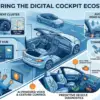
Interiors are changing rapidly. Large touchscreens, digital instrument clusters, wireless charging, connected apps, and premium audio systems are now major selling points.
Buyers are comparing user interfaces and software features just as much as engine specifications. The cabin is evolving into a digital environment where navigation, communication, entertainment, and vehicle controls work together seamlessly.
For families, this means more convenience. For tech-focused buyers, it means a car that feels modern and future-ready.
What This Means for Indian Buyers
Indian consumers are increasingly choosing vehicles based on technology, safety, and connectivity rather than only engine size or horsepower.
Compact SUVs and midsize SUVs are leading this change. Buyers expect features such as connected car technology, wireless smartphone integration, digital displays, and advanced safety systems even in mid-range variants.
This shift is pushing manufacturers to offer smarter features across a wider price range, making technology more accessible than ever.
The Road Ahead
The transition from mechanical machines to smart cars is still in progress. Fully autonomous driving may take more time, but the foundation is already being built through connectivity, sensors, software, and artificial intelligence.
In the coming years, cars will likely become even more personalized, energy-efficient, and connected to digital services. Updates may arrive regularly, new features may be unlocked through software, and vehicles may communicate with infrastructure and other cars.
Final Thoughts
The biggest innovation in cars in 2025 is not just electric power or a larger touchscreen. It is the complete transformation of the automobile into an intelligent, connected platform.
Cars are evolving from purely mechanical products into smart mobility devices that combine engineering with software, data, and AI. For drivers, this means better safety, greater convenience, lower running costs, and a more connected driving experience.
The future of the automobile is no longer defined only by the engine under the hood. In 2025, the real power lies in the software, sensors, and intelligence that make the car smarter every day.