The 7-Seater EV Revolution in India:
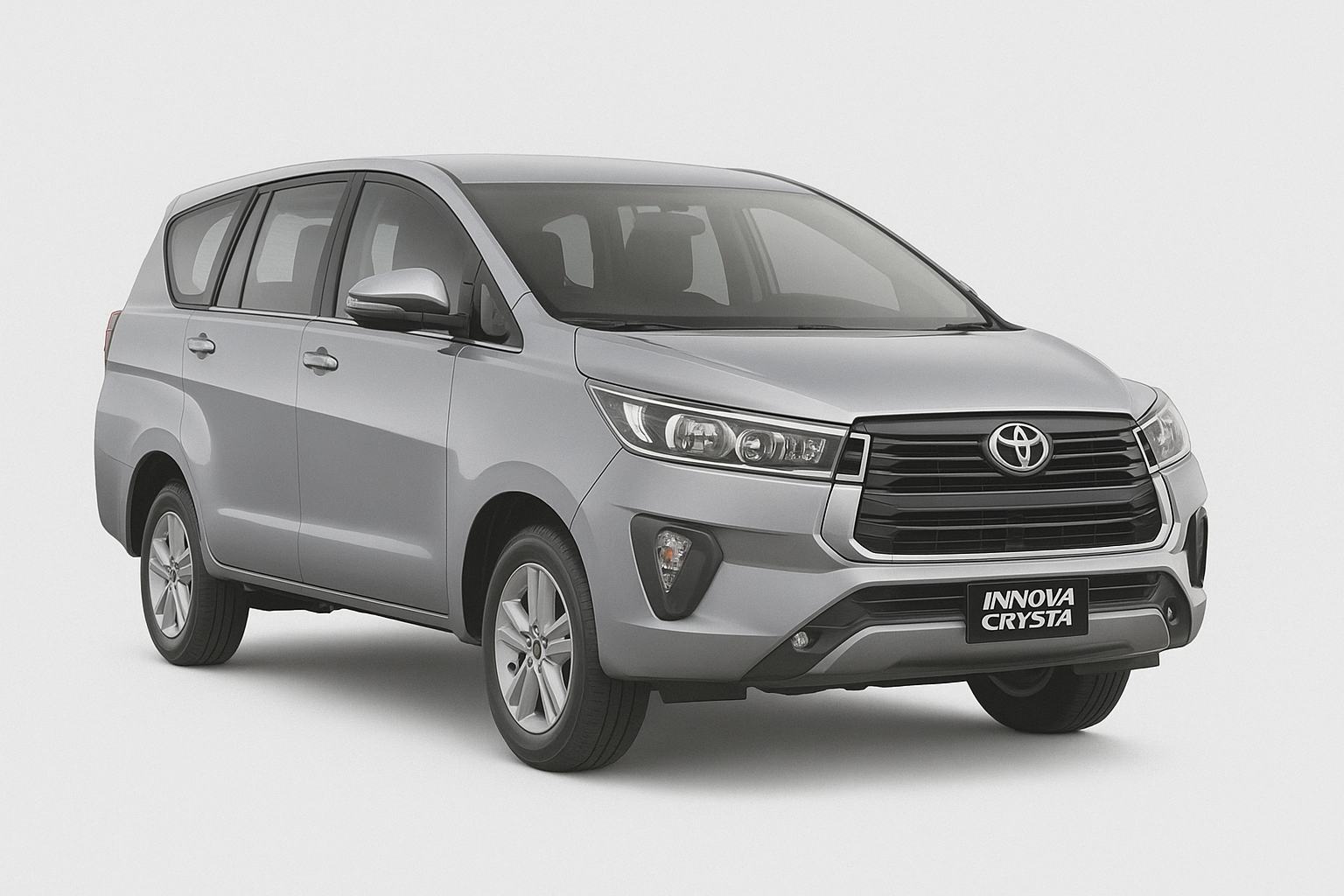
The Indian automobile market is changing faster than ever before. Just a few years ago, family buyers had very limited options when searching for a spacious vehicle with low running costs. Most people automatically selected diesel or petrol-powered MPVs and SUVs because electric alternatives (Ev) simply did not exist in the market. Vehicles such as the Innova, Ertiga, and Carens became household names due to their practicality and affordability.
However, the landscape is now shifting rapidly. Electric vehicles are no longer limited to compact city hatchbacks or premium luxury sedans. Manufacturers have started recognizing a growing demand among Indian families for larger vehicles that provide more seats, better comfort, and reduced ownership expenses.
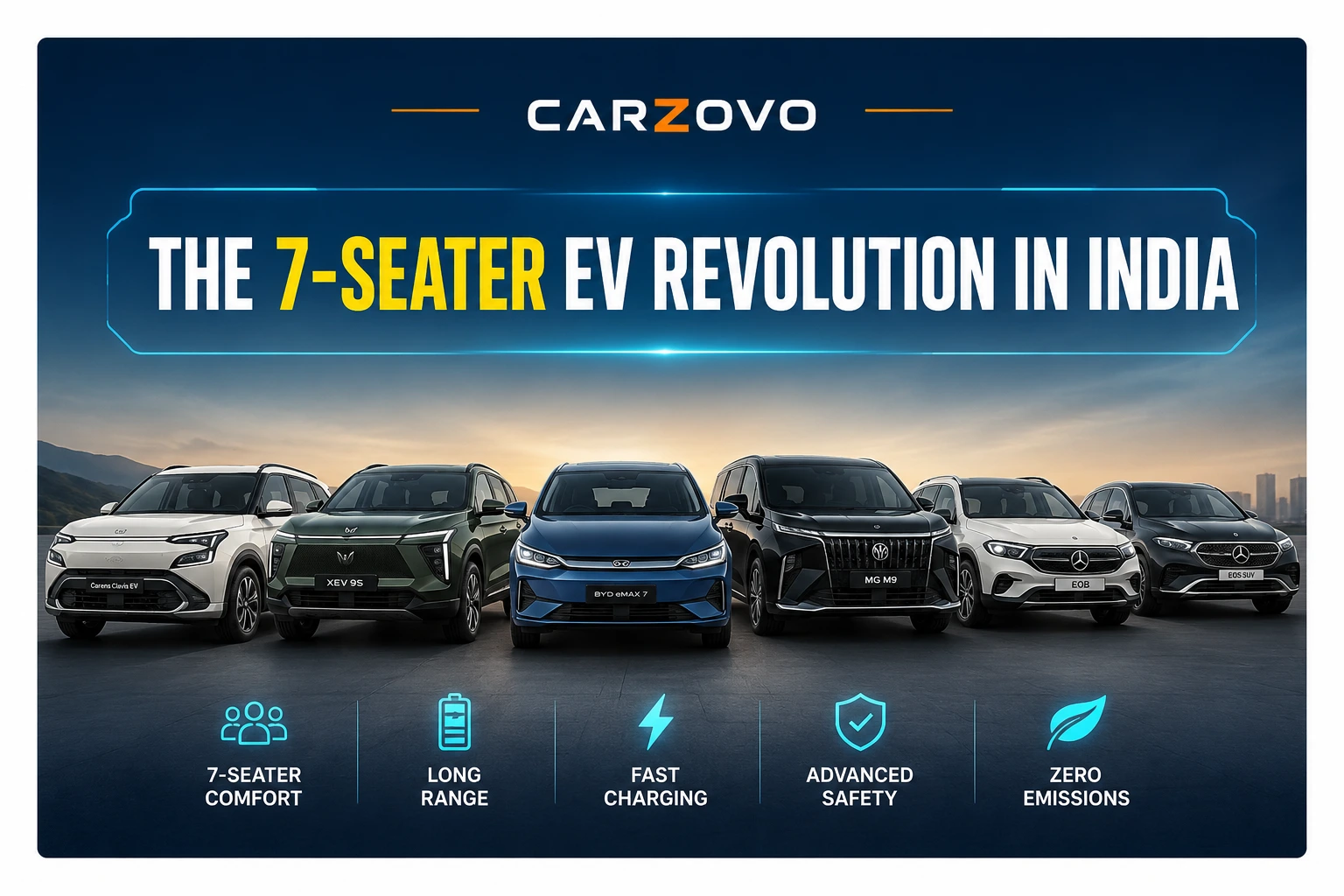
The emergence of practical 7-seater electric vehicles is beginning to reshape family mobility in India. Buyers can now consider vehicles that combine spacious interiors with modern technology, long driving range, and significantly lower running costs compared to conventional fuel-powered vehicles.
Whether you are planning long family road trips, daily urban commuting, or simply looking to future-proof your next purchase, the upcoming generation of electric family cars deserves serious attention.
Why 7-Seater Electric Vehicles Are Becoming Popular in India
Indian buyers traditionally prefer larger vehicles for a number of reasons. Families often travel together, long-distance road trips remain common, and additional seating capacity is useful even when it is not required every day.
At the same time, fuel prices continue to increase, creating additional ownership costs for large petrol and diesel vehicles.
Electric family cars offer several advantages that make them attractive:
Lower running costs make daily usage significantly cheaper than fuel-powered alternatives. Electric motors also provide instant acceleration and smoother performance, improving overall driving comfort.
Unlike traditional engines, electric powertrains create minimal noise and vibration. This leads to a much quieter and more premium cabin experience.
Modern EVs also bring connected technology, advanced safety systems, and sophisticated software features that appeal to technology-focused buyers.
As charging infrastructure expands across India, family buyers are slowly becoming more comfortable with the idea of switching to electric mobility.
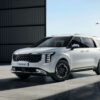
Kia Carens Clavis EV – The Practical Family Choice
Kia has already established itself as a strong player in India through feature-rich vehicles and premium interiors. The Carens has become a popular option among family buyers because of its spacious cabin and versatile seating arrangements.
The electric version aims to carry forward these strengths while adding the benefits of electric mobility.
Expected pricing for the Carens Clavis EV could start around ₹18 lakh and extend to approximately ₹25 lakh depending on the selected battery configuration.
The vehicle is expected to offer multiple battery choices, with an estimated driving range between 400 km and 500 km.
One of the biggest advantages of the Carens EV is likely to be its practicality. Buyers can expect flexible seating layouts with six-seat and seven-seat configurations. Premium features including connected technology, digital displays, and advanced driver-assistance systems are also expected.
For families primarily driving within cities while occasionally taking weekend trips, the Carens EV could become one of the strongest options available.
Mahindra Electric Family SUV – The Future-Focused Contender
Mahindra has been investing heavily in electric mobility and next-generation vehicle platforms. The company aims to create products designed specifically for electric powertrains instead of modifying traditional vehicles.
Its future electric family SUV products are expected to combine strong road presence with advanced technology and practical cabin space.
Expected battery capacities could range between 59 kWh and 79 kWh, while estimated driving range figures may reach between 500 km and 650 km.
Mahindra’s upcoming electric vehicles are expected to focus heavily on technology integration.
The interiors may include large connected displays stretching across the dashboard, advanced software systems, premium cabin materials, and fast-charging support.
Buyers who prefer aggressive styling and a commanding SUV presence could find Mahindra’s future electric products extremely appealing.
BYD eMax 7 – The Premium Family Cruiser
BYD has established itself as one of the world’s largest electric vehicle manufacturers and battery producers. The company’s experience in battery technology gives it an important advantage in electric mobility.
The BYD eMax 7 focuses more on refinement and comfort rather than aggressive design elements.
Unlike traditional SUVs, the eMax 7 follows a premium MPV approach that prioritizes passenger comfort and smooth driving characteristics.
The vehicle is expected to be priced between ₹27 lakh and ₹30 lakh.
Power comes from BYD’s Blade Battery technology, which has gained attention globally because of its safety and durability characteristics.
Driving range figures are expected to vary between 420 km and 530 km depending on variants.
Inside the cabin, buyers can expect premium materials, a large rotating touchscreen display, digital instrumentation, ventilated seating, and modern connected features.
For highway users and long-distance family travel, the eMax 7 may become one of the most refined choices in its segment.
MG M9 – The Luxury MPV Experience
The premium MPV segment has started attracting buyers who prefer comfort-focused vehicles instead of large SUVs.
The MG M9 is expected to focus heavily on rear-seat luxury and executive comfort.
Expected pricing may begin around ₹70 lakh and position it in the premium category.
The large battery pack could offer driving range figures around 500–550 km.
Instead of emphasizing sporty performance, the M9 focuses on passenger experience.
Features such as powered sliding doors, premium rear seating arrangements, large infotainment systems, and multiple comfort technologies are expected.
For buyers seeking luxury family transportation, the M9 could emerge as a highly attractive option.
Mercedes-Benz EQB – Luxury with Flexibility
The Mercedes-Benz EQB combines luxury with practicality and offers a slightly different approach compared to traditional MPVs.
Instead of focusing entirely on space, it combines SUV styling with additional seating capability.
Pricing begins in the premium category and targets buyers seeking a balance between urban usability and family practicality.
The vehicle offers advanced technology, connected features, multiple driving modes, and premium interior materials.
Its compact dimensions may make it attractive for city users who occasionally require additional seating.
Mercedes-Benz EQS SUV – The Ultimate Family EV
At the top of the premium segment sits the Mercedes-Benz EQS SUV.
This vehicle represents luxury electric mobility without compromise.
Its massive battery pack and highly advanced engineering allow range figures that can exceed 600 km depending on driving conditions and variants.
Inside, buyers can expect features such as premium leather upholstery, multiple climate zones, advanced infotainment systems, rear entertainment screens, and air suspension systems.
The EQS SUV is not designed for affordability. Instead, it targets buyers who want maximum comfort, technology, and luxury.
Which 7-Seater EV Should You Buy?
Choosing the right electric family vehicle depends entirely on your priorities.
Families looking for affordability and practicality may prefer the Kia Carens Clavis EV.
Buyers seeking futuristic design and advanced technology may find Mahindra’s upcoming electric SUVs more attractive.
Customers who value refinement and comfort could lean toward the BYD eMax 7.
Luxury-focused buyers may prefer premium options like the MG M9 or Mercedes electric SUVs.
Final Verdict
The era of family electric mobility in India is no longer approaching—it has already begun.
Large family vehicles are slowly transitioning from fuel-powered engines toward cleaner and more efficient electric alternatives. Improvements in battery technology, driving range, and charging infrastructure are making electric vehicles increasingly practical for everyday usage.
The coming years may completely transform how Indian families travel. Buyers no longer need to sacrifice comfort or practicality when choosing environmentally friendly transportation.
The future of family mobility in India appears electric, spacious, and more exciting than ever before.