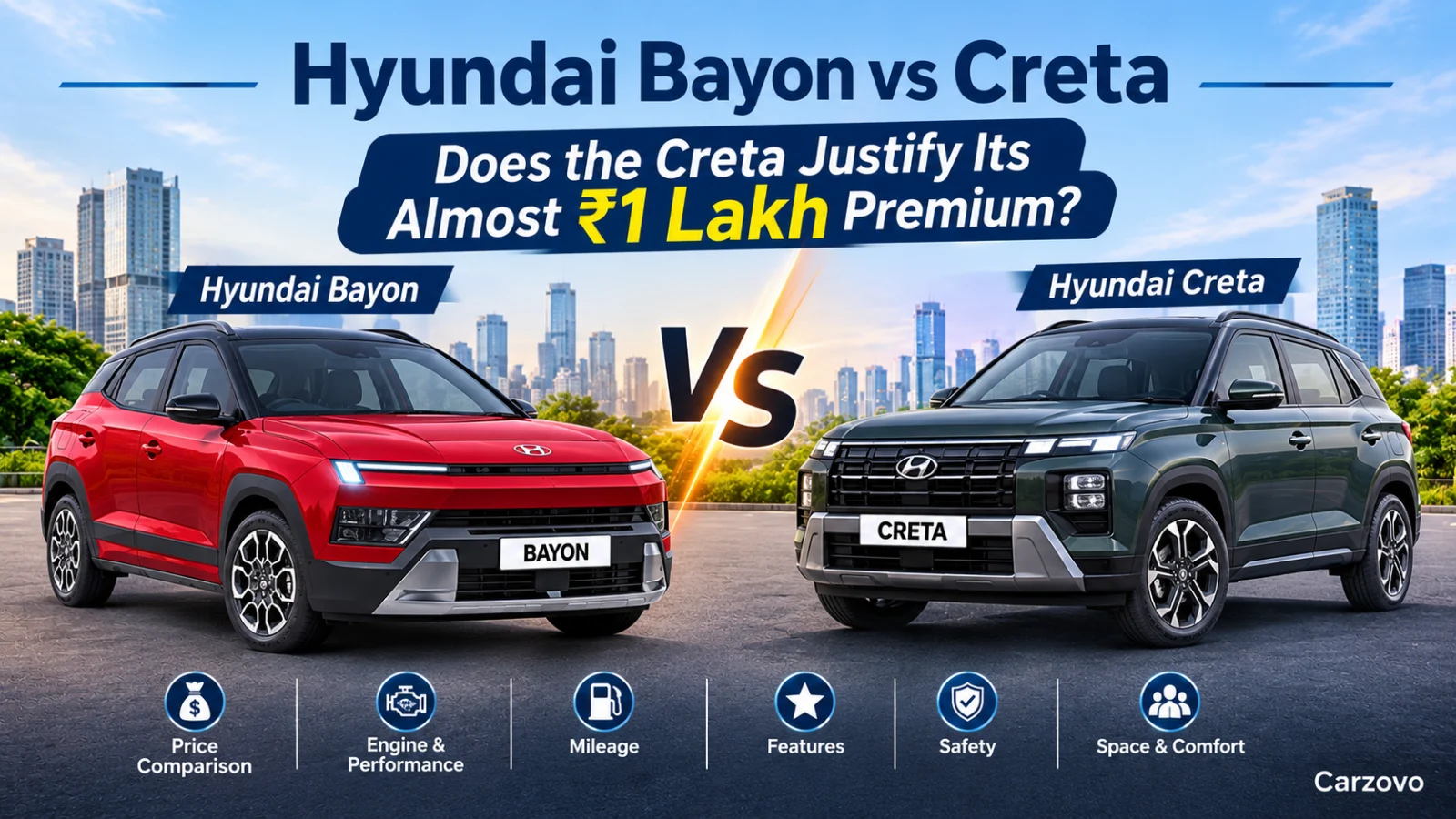
The Hyundai Bayon has entered the Indian SUV market with an introductory starting price of ₹9.99 lakh, creating a new challenge for the Hyundai Creta. With the Creta starting at ₹10.91 lakh, buyers now have two Hyundai SUVs separated by less than ₹1 lakh at the entry level.
For someone planning to purchase a new SUV in 2026, this is an interesting comparison. Should you save money and buy the newly launched Bayon, or spend approximately ₹91,000 more on the established Creta?
The answer depends on more than exterior styling or brand popularity.
The Bayon introduces a new-generation digital cockpit, advanced AI technology and a surprisingly large boot. Meanwhile, the Creta offers multiple engine choices, established market recognition and a slightly larger overall body.
Both vehicles have distinct strengths, but the small starting-price difference makes the buying decision more challenging.
Hyundai Bayon vs Creta 2026: Price Comparison
Hyundai launched the Bayon in India on October 26, 2026, with an introductory ex-showroom starting price of ₹9,99,900.
The Hyundai Creta has a listed starting ex-showroom price of ₹10,90,700.
This creates a price difference of ₹90,800 between the entry-level variants.
| Price comparison | Hyundai Bayon | Hyundai Creta |
|---|---|---|
| Starting ex-showroom price | ₹9,99,900 | ₹10,90,700 |
| Difference | — | ₹90,800 more |
| Base engine | 1.5L petrol | 1.5L petrol |
| Automatic availability | Yes | Yes |
| Diesel option | No | Yes |
| Turbo-petrol option | No | Yes |
The difference appears small, especially when purchasing a vehicle costing approximately ₹10–11 lakh.
However, these are starting prices rather than prices of equally equipped variants.
A higher Bayon variant with advanced technology may cost more than an entry-level Creta. Similarly, a well-equipped Creta can cost substantially more than the base model.
The most meaningful comparison is therefore between variants offering similar features and transmissions.
Exterior Design: New-Generation Bayon vs Established Creta
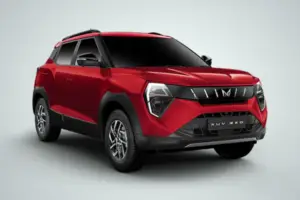
The Hyundai Bayon introduces a modern design language with sharp lighting elements, sculpted body panels and a distinctive front fascia.
Its H-Edge LED daytime running lights and angular headlamp arrangement give it a futuristic appearance.
The Bayon also features pronounced wheel arches, roof rails and alloy-wheel options that strengthen its SUV character.
Its relatively compact length makes it appealing for urban environments where parking and manoeuvrability are important.
The Creta follows a more upright and conventional SUV design.
Its wider-looking front fascia, bold grille and substantial proportions create a strong road presence.
The Creta’s design has become familiar on Indian roads, which can be an advantage for buyers who prefer a proven and recognizable vehicle.
Which SUV looks better?
The Bayon may appeal more to younger customers and technology-focused buyers who prefer a fresh design.
The Creta is likely to attract buyers who value a traditional SUV appearance and a more established model identity.
Neither vehicle has an objective advantage in styling. Personal preference will play a major role.
Hyundai Bayon vs Creta: Dimensions and Road Presence
Both SUVs are closely matched in several dimensions, but there are some important differences.
| Dimensions | Hyundai Bayon | Hyundai Creta |
|---|---|---|
| Length | 4,245 mm | 4,330 mm |
| Width | 1,810 mm | 1,790 mm |
| Wheelbase | 2,600 mm | 2,610 mm |
| Ground clearance | 205 mm | Approximately 190 mm |
| Boot capacity | 505 litres | Approximately 433 litres |
The Creta is 85 mm longer than the Bayon and has a wheelbase advantage of 10 mm.
Surprisingly, the Bayon is 20 mm wider on paper.
The Bayon also offers a larger quoted boot capacity, which may be particularly useful for families travelling with multiple suitcases.
These differences show that the more affordable Bayon is not necessarily less practical.
However, exterior dimensions do not reveal everything about passenger comfort. Seat design, cabin width, headroom and floor layout also influence how spacious a vehicle feels.
A proper test drive and rear-seat comparison are recommended before choosing either SUV.
Engine Comparison: Does the Creta Offer Better Performance?
The Hyundai Bayon uses a 1.5-litre four-cylinder naturally aspirated petrol engine producing 115 PS and 143.8 Nm of torque.
This engine is available with a six-speed manual gearbox or Hyundai’s Intelligent Variable Transmission.
The iVT version offers driving modes, paddle shifters and additional responsiveness-oriented features such as Dash Boost Mode and Sporty Drive Tech.
For daily city commuting, this combination should provide smooth and predictable performance.
The Creta’s regular 1.5-litre naturally aspirated petrol engine produces similar output.
This means buyers comparing the standard petrol engines should not expect a major power advantage simply by choosing the Creta.
Where the Creta moves ahead
The Creta offers a broader engine lineup.
Alongside its regular petrol engine, buyers can choose a 1.5-litre turbo-petrol engine or a 1.5-litre diesel engine.
The turbo-petrol version delivers stronger acceleration and is better suited to drivers who want more responsive highway performance.
The diesel engine is attractive to buyers who frequently cover long distances and value stronger low-speed torque.
The Bayon currently offers only the 1.5-litre naturally aspirated petrol engine in India.
For someone seeking a regular petrol SUV, this may not be a disadvantage.
However, buyers who specifically want diesel efficiency or turbo-petrol performance will find the Creta more suitable.
Interior and Dashboard: Which SUV Feels More Modern?
The Bayon’s biggest advantage is its newly introduced digital technology.
Selected variants feature two 12.3-inch curved displays integrated into a panoramic dashboard arrangement.
The connected cockpit uses NVIDIA-accelerated technology and supports Hyundai Bluelink services.
One of the most interesting additions is Hyundai’s generative AI voice assistant, combining Perplexity intelligence with SoundHound voice technology.
This system is designed to support natural-language conversations and provide useful information during journeys.
The Bayon also supports more than 70 connected-car features and over-the-air updates for selected vehicle controllers.
Its cabin uses a black and olive-grey colour combination, creating a contemporary appearance.
What does the Creta offer?
The Creta continues to offer a modern interior with digital displays, connected-car functions and premium comfort features.
Depending on the variant, equipment includes ventilated front seats, a panoramic sunroof, wireless charging, automatic climate control and a premium audio system.
Its dashboard layout is familiar and functional, while the higher variants deliver a premium cabin experience.
Which has the better interior?
The Bayon has the advantage in newly introduced AI and digital cockpit technology.
The Creta remains competitive in comfort and equipment, but buyers interested in the latest connected-car features may find the Bayon particularly attractive.
Importantly, the most advanced Bayon features are offered on selected variants rather than necessarily being included in the entry-level model.
Hyundai Bayon vs Creta: Safety Features
Safety is another important consideration when comparing these SUVs.
The Bayon is based on Hyundai’s Global K Enhanced Platform, with a body structure designed to meet demanding Indian safety requirements.
Hyundai says the Bayon offers more than 35 safety features as standard across the range.
These include six airbags, electronic stability control, hill-start assist and a tyre-pressure monitoring system.
Higher variants offer Hyundai SmartSense Level 2 Pro ADAS with 23 advanced driver-assistance features.
The technology includes functions designed to assist with highway driving, speed management, lane positioning and parking.
Creta safety equipment
The Creta also offers six airbags, electronic stability control and several additional active and passive safety systems.
Selected variants provide Level 2 ADAS, helping drivers manage certain highway and traffic situations.
Both vehicles offer substantial safety equipment, although the exact features vary by trim.
It is important not to confuse a manufacturer’s safety engineering target with an independently awarded crash-test rating.
Which SUV is safer?
Neither vehicle should be declared the safer option solely on the number of listed safety features.
Buyers should consider independent crash-test results, structural protection and the safety equipment included in the exact variant.
ADAS is useful, but it does not replace responsible driving.
Cabin Comfort and Family Practicality
The Hyundai Bayon has been designed to combine compact exterior dimensions with practical interior packaging.
Its 2,600 mm wheelbase allows Hyundai to provide a useful amount of cabin space.
Selected variants offer ventilated front seats, an electrically adjustable driver’s seat, rear reclining seats and automatic climate control.
Rear AC vents and charging ports further improve passenger convenience.
The 505-litre boot is a particularly attractive feature.
Families who frequently travel with luggage may find this more useful than a modest increase in exterior length.
Is the Creta more comfortable?
The Creta has a slightly longer wheelbase and an established reputation as a family SUV.
Its higher variants provide comfortable seating, a panoramic sunroof and a range of convenience features.
However, a longer wheelbase does not automatically guarantee greater rear-seat comfort.
Buyers should compare seat cushioning, under-thigh support, headroom and knee room in both vehicles.
For families, the best SUV is the one that comfortably accommodates all regular passengers rather than the one with the larger exterior dimensions.
Mileage and Daily Running Costs
The Bayon and the naturally aspirated petrol Creta use closely related engine technology.
Both are designed to deliver smooth everyday performance, with manual and automatic options.
Actual fuel consumption will depend on traffic, driving habits, transmission, vehicle load and road conditions.
The Bayon’s relatively compact exterior could make it convenient for urban use, but that alone does not establish a clear mileage advantage.
The Creta’s diesel engine provides another option for high-mileage users.
However, diesel ownership involves additional considerations, including purchase price, maintenance, emission-system requirements and applicable local regulations.
For buyers driving mainly within the city, the regular petrol variants of both SUVs deserve consideration.
A fair mileage comparison should use matching test conditions and equivalent transmissions.
Ownership Experience and Resale Value
The Hyundai Creta has been available in India for several years and has built a substantial customer base.
Its established market presence gives buyers access to a longer history of ownership feedback, service experiences and resale trends.
The Bayon, by comparison, is a newly introduced vehicle.
Although its petrol engine is familiar within Hyundai’s lineup, the model itself has not yet developed the same long-term Indian ownership record.
This does not mean the Bayon will be unreliable or have poor resale value.
It simply means that its future depreciation and long-term market demand are less certain.
Both vehicles benefit from Hyundai’s service network, but buyers should compare warranty coverage, maintenance packages and insurance quotations for their chosen variants.
Is the Creta Worth Paying ₹90,800 More?
The answer depends on what buyers expect from their new SUV.
For someone who wants a regular petrol engine, modern styling and useful technology, the Bayon could be the more attractive choice.
It offers a large boot, contemporary cabin design and an impressive range of available digital features.
The lower starting price also leaves some additional room in the budget for insurance, accessories or other ownership expenses.
However, the Creta offers advantages that the Bayon cannot currently match.
Its diesel and turbo-petrol engine options provide more flexibility, while its established ownership record may appeal to buyers who prefer a familiar vehicle.
The Creta also offers a slightly longer body and a broad variant range.
When should you choose the Bayon?
The Bayon is worth considering if you primarily drive in the city, prefer a naturally aspirated petrol engine and want modern technology.
It also makes sense if boot capacity and a lower initial purchase price are important priorities.
When should you choose the Creta?
The Creta is a better starting point if you want a diesel engine, stronger turbo-petrol performance or a model with an established Indian market history.
It may also appeal to buyers who prefer its exterior styling and cabin layout.
Hyundai Bayon vs Creta 2026: Final Buying Verdict
The Hyundai Bayon is a serious alternative to the Creta rather than simply a cheaper Hyundai SUV.
Its 1.5-litre petrol engine, 505-litre boot, modern digital cockpit and advanced safety equipment make it a compelling new entry in the Indian market.
The Creta, however, remains a versatile choice because of its wider engine lineup, established ownership record and familiar family-SUV character.
At the starting prices, the Creta costs approximately ₹90,800 more than the Bayon.
For buyers who only need a naturally aspirated petrol SUV, that additional amount may not automatically deliver enough benefits to justify the premium.
However, for buyers who want diesel or turbo-petrol performance, the Creta offers choices unavailable in the Bayon.
The Carzovo verdict: The Hyundai Bayon is the more interesting value proposition for technology-focused petrol SUV buyers, while the Creta remains the stronger all-round choice for customers who want greater engine flexibility and an established ownership history.
The smartest decision is to compare similarly equipped variants, obtain actual on-road quotations and test-drive both SUVs before purchasing.