Purchasing a new vehicle is one of the most significant financial decisions most consumers make. As the automotive industry undergoes a seismic shift driven by technological innovation, environmental necessity, and changing user preferences, the landscape of car ownership is evolving faster than ever before. Entering the automotive market in 2026 requires looking beyond classic considerations like fuel efficiency, horsepower, and exterior aesthetic.
Today’s vehicles are sophisticated software platforms, eco-conscious transportation solutions, and connected digital ecosystems on wheels. Making an informed purchasing decision means understanding the pivotal industry trends that are defining modern vehicles. Here is a comprehensive guide to the top five auto trends you must evaluate before signing on the dotted line for a new car in 2026.
Trend 1: Advanced Solar and Next-Generation EV Charging Infrastructure
Electric vehicles (EVs) have officially transitioned from early-adopter novelties into mainstream choices. However, as EV adoption reaches unprecedented levels, the ecosystem surrounding EV power generation and charging infrastructure has evolved dramatically.
The Rise of Solar-Assisted Charging
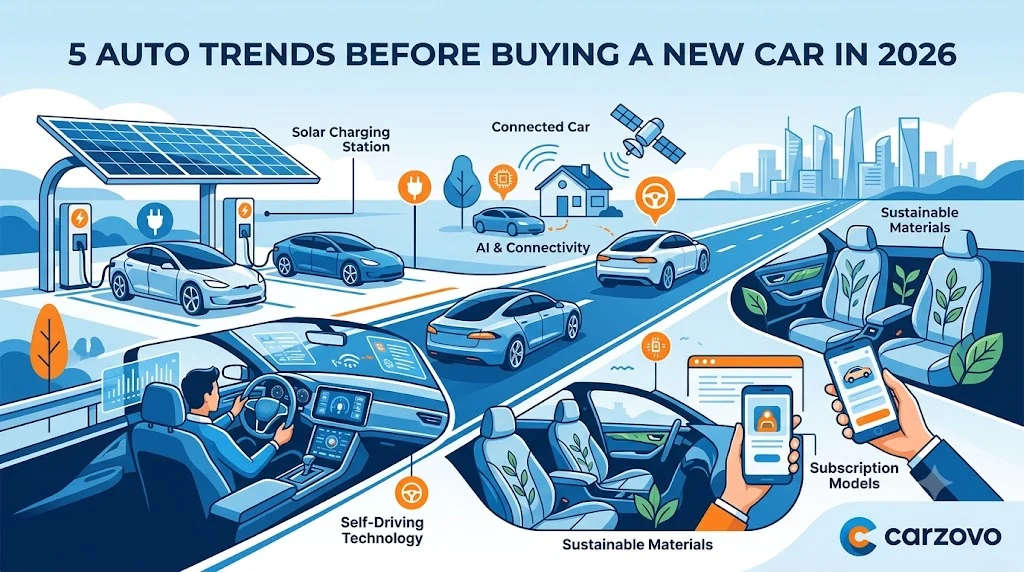
One of the most noticeable advancements in 2026 is the integration of solar power into both public charging infrastructure and the vehicles themselves. Solar charging stations equipped with high-efficiency photovoltaic canopies are reducing grid dependency by capturing solar energy to supply power directly to EV charging hubs.
For car buyers, some top-tier models now feature integrated solar roof panels. While solar roofs do not fully replace plug-in charging, they provide supplemental daily range—often adding between 10 to 25 miles of pure solar power per day simply by parking under the sun. This capability helps offset energy costs, powers internal climate control while parked, and extends overall driving range.
Next-Level Fast Charging and Battery Longevity
Charging speeds and battery technology have reached new benchmarks. Modern EVs utilize high-voltage architecture capable of accepting ultra-fast charging rates, reducing 10% to 80% charging times down to under 15 minutes at compatible stations. Furthermore, advancements in solid-state and improved lithium-iron-phosphate (LFP) chemistry mean batteries last significantly longer, experience lower thermal degradation, and feature extended warranty periods.
What to Look for Before Buying
- Charging Standard Compatibility: Ensure your chosen EV supports modern universal plug standards or comes with appropriate fast-charging adapters.
- Home Solar Integration: Check if your home electrical setup or solar panel system can support smart bidirectional chargers, allowing your car to power your home during peak energy pricing hours.
- Real-World Range vs. Battery Efficiency: Focus on overall efficiency (kWh per mile or km) rather than just raw battery pack size, as efficient cars charge faster and cost less to run.
Trend 2: Artificial Intelligence and Connected Vehicle Ecosystems
Vehicles are no longer standalone mechanical units; they are fully connected smart devices integrated into the Internet of Things (IoT). Artificial intelligence (AI) has moved from a novelty feature to the backbone of vehicle management, driver comfort, and infotainment.
Seamless Smart Home and Satellite Connectivity
Modern connected cars maintain continuous, high-speed communication links utilizing 5G and low-Earth-orbit satellite networks. This ensures uninterrupted connectivity even in remote geographic regions.
Through integrated IoT platforms, your vehicle can communicate directly with your smart home setup. For instance, your car can automatically signal your smart thermostat to adjust your home’s temperature as you approach, open garage doors without manual remote controls, or verify that home security systems are armed when you drive away.
AI-Powered Personal Assistants and Predictive Maintenance
Vehicle infotainment systems are now powered by generative AI and natural language processing. Drivers can converse naturally with their vehicle assistant to adjust cabin settings, plan routes based on real-time traffic and weather conditions, or locate specific amenities along a road trip.
Beyond convenience, embedded AI monitors onboard diagnostic sensors to provide predictive maintenance alerts. Instead of waiting for a engine warning light to illuminate, the vehicle can analyze wear-and-tear patterns, predict component wear before failure occurs, and schedule service appointments automatically with your preferred dealership or technician.
What to Look for Before Buying
- Over-the-Air (OTA) Update Support: Confirm that the manufacturer delivers comprehensive software and firmware updates remotely, ensuring your vehicle improves over time.
- Data Privacy Settings: Review the manufacturer’s data privacy policies to understand how your driving, location, and voice data are managed and shared.
- Infotainment Responsiveness: Test the natural language interface and phone-vehicle ecosystem integration during your test drive to evaluate user-friendliness.
Trend 3: Next-Stage Self-Driving and Driver-Assistance Technology
Automated driving systems have made remarkable strides. While fully driverless vehicles operating everywhere without human oversight remain specialized, advanced Level 2+ and Level 3 driver-assistance systems (ADAS) are increasingly available in production vehicles.
Level 3 Conditional Automation
Many new model releases feature certified Level 3 autonomous driving capabilities under specific conditions, such as designated highways or slow-moving traffic jams. Under these conditions, the vehicle handles acceleration, steering, braking, and lane changes, allowing the driver to safely disengage from active driving tasks while remaining ready to retake control when prompted.
Advanced Sensor Suites and Active Safety
Safety is the core driver of autonomous technology. Modern sensor suites combine high-definition LiDAR, radar, high-resolution cameras, and ultrasonic sensors to create a 360-degree, real-time 3D model of the vehicle’s surroundings.
Active safety systems have evolved beyond basic lane-keep assist and emergency braking:
- Intersection Collision Avoidance: Scans cross-traffic at blind intersections to prevent broadside collisions.
- Evasive Steering Assist: Helps maneuver around sudden obstacles, pedestrians, or animals within fractions of a second.
- Driver Monitoring Systems: Infrared interior cameras continuously track driver gaze, head position, and drowsiness indicators to ensure attention remains where required.
What to Look for Before Buying
- ADAS Classification: Clarify whether the vehicle’s systems are Level 2 (driver must keep eyes on the road at all times) or Level 3 (conditional hands-off/eyes-off operational modes).
- Sensor Integration: Check where sensors are located and how easily they can be damaged or obscured by dirt, snow, or road debris.
- Insurance and Liability Impact: Consult with your insurance provider to understand how driver-assist packages influence policy premiums and coverage details.
Trend 4: Sustainable Materials and Eco-Conscious Cabin Design
Environmental sustainability in the automotive sector extends far beyond zero tailpipe emissions. Manufacturers are re-engineering vehicle interiors and production pipelines to reduce the carbon footprint of the manufacturing process itself.
Circular Economy Materials and Vegan Leathers
Traditional leather and petroleum-based plastics are increasingly being replaced by premium, eco-friendly alternatives. Automotive interiors now feature seats and surfaces constructed from high-grade synthetic leathers derived from plant-based materials like bio-polyurethanes, apple skins, pineapple fibers, and recycled ocean plastics.
Furthermore, interior trims incorporate fast-growing bamboo, reclaimed wood, natural cork, and recycled aluminum. These materials deliver a luxurious look and feel while drastically lowering greenhouse gas emissions during production.
Weight Reduction and Recyclability
Using sustainable lightweight materials throughout the cabin and body architecture directly enhances vehicle efficiency. Lighter cars require less energy to accelerate, extending the range of electric vehicles and improving fuel economy in hybrid models. Moreover, major manufacturers are designing interior components with end-of-life recycling in mind, ensuring that cabin panels, fabrics, and structural elements can be reclaimed and repurposed when the vehicle reaches the end of its life cycle.
What to Look for Before Buying
- Material Durability: Evaluate how sustainable fabrics and bio-leathers feel to the touch and research their long-term resistance to wear, staining, and sunlight exposure.
- Cabin Air Quality: Look for built-in cabin filtration systems (such as HEPA filtration) that complement sustainable interior builds by eliminating micro-particles and volatile organic compounds (VOCs).
- Corporate Sustainability Record: Examine the car manufacturer’s overall carbon neutrality goals, supply chain transparency, and recycling commitments.
Trend 5: Flexible Ownership and Subscription-Based Mobility Models
The business model of buying and owning a vehicle has evolved. Traditional outright purchasing and standard auto leasing are now complemented by flexible digital ownership and feature-on-demand subscription models.
Features-on-Demand (FoD)
Modern vehicles come pre-equipped with extensive hardware capabilities, such as heated seating, premium sound systems, adaptive headlights, or enhanced driver-assist packages. Manufacturers allow owners to unlock these features via smartphone applications using monthly or annual subscriptions, or as one-time permanent digital purchases.
This model allows buyers to lower the upfront purchase price of the vehicle by selecting only the options they need immediately, with the flexibility to activate extra features temporarily—such as enabling heated seats only during winter months or enabling advanced navigation during a summer road trip.
Flexible Vehicle Subscriptions
For drivers hesitant to commit to a multi-year loan or lease, flexible vehicle subscription services provide a compelling alternative. These manufacturer- or dealer-backed programs bundle vehicle usage, insurance, routine maintenance, roadside assistance, and wear-and-tear coverage into a single monthly fee. Subscribers can swap vehicles periodically or cancel with shorter notice periods compared to conventional lease agreements.
What to Look for Before Buying
- Hardware Lockout Policies: Check which features are included standard and which require recurring subscription fees to remain operational.
- Resale Value Implications: Understand how software-locked hardware affects the long-term resale or trade-in value of the vehicle.
- Total Ownership Cost: Compare the long-term cost of a standard purchase against subscription-based options to choose the model that fits your budget and usage patterns best.
Conclusion: Making the Right Choice for Your Future Drive
The automotive landscape in 2026 offers unprecedented choices, efficiency, safety, and convenience. Navigating these options requires balancing future-proof technology with your personal driving habits, daily budget, and long-term ownership goals.
Summary Checklist Before Making Your Final Decision
- Power Strategy: Evaluate your access to charging infrastructure, whether home-based or public, and consider solar-assisted technologies.
- Connectivity & Software: Choose a platform with robust over-the-air update support, high data security, and seamless integration with your personal digital life.
- Safety Capabilities: Prioritize vehicles equipped with advanced driver assistance and proven active safety technology.
- Sustainability: Consider the environmental impact of interior materials, vehicle weight, and the manufacturer’s supply chain practices.
- Financial Structure: Analyze upfront costs versus long-term subscription fees to select the most cost-effective ownership or access model.
By keeping these five core trends in mind, you can select a vehicle that meets your current mobility needs while remaining relevant, enjoyable, and valuable for years to come.