India’s automobile market is entering one of its most interesting phases in 2026. Car buyers are no longer choosing vehicles only on the basis of price, mileage and engine size. SUVs, electric vehicles, hybrids, connected technology, safety features and premium interiors are increasingly influencing buying decisions.
The market has also demonstrated strong demand during 2026. India’s passenger-vehicle registrations reached around 4.12 lakh units in July 2026, up 15.4% year-on-year, while August wholesale passenger-vehicle sales reached a record 4.48 lakh units. SUVs remained a major force behind this growth.
At the same time, the powertrain landscape is changing. Petrol continues to remain important, but CNG, hybrids and electric vehicles are taking a larger share of consumer attention. This makes Auto Trends 2026 more than a story about increasing car sales; it is about a fundamental change in what Indian consumers expect from their cars.
SUVs Continue to Dominate the Indian Market
The biggest story in the Indian car market remains the rise of SUVs.
From compact SUVs designed for city driving to large three-row models, buyers increasingly prefer the higher seating position, road presence and practicality offered by SUVs. JATO data showed SUVs and compact cars together accounting for 57.2% of India’s passenger-vehicle registrations in May 2026.
This preference is also changing the strategies of car manufacturers. Almost every major manufacturer now has multiple SUVs across different price categories.
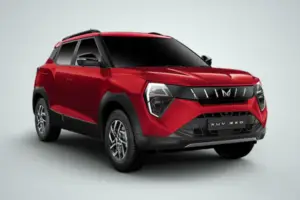
The compact SUV has become particularly important because it combines relatively manageable dimensions with features and styling traditionally associated with larger vehicles. Buyers can get a commanding driving position, modern infotainment, connected features and increasingly sophisticated safety equipment without moving into the premium price brackets.
The SUV trend is therefore unlikely to disappear soon. Instead, the segment is expected to become even more diverse.
Electric Cars Are Moving Into the Mainstream
Electric cars are another defining trend of 2026.
EV adoption in India is no longer restricted to a small group of early adopters. More models, improved technology and growing consumer awareness are helping electric vehicles reach a wider audience.
In August 2026, electric passenger-vehicle registrations increased around 50% year-on-year to 30,325 units. EVs represented approximately 7.4% of passenger-vehicle registrations during the month.
One of the most important changes is the growing variety of electric cars. Buyers can now consider electric hatchbacks, compact SUVs, midsize SUVs and premium electric vehicles instead of being limited to a handful of models.
The development of larger batteries, faster charging capabilities and improved range is also reducing some of the earlier concerns surrounding EV ownership.
However, charging infrastructure, highway charging availability, battery replacement costs and apartment charging remain important considerations. EV growth is strong, but the transition will continue to happen gradually rather than overnight.
Hybrid Cars Are Becoming an Important Middle Ground
While EVs receive much of the attention, hybrid cars are quietly becoming another major part of India’s changing automotive landscape.
Strong hybrids can deliver improved fuel efficiency without requiring owners to depend entirely on charging infrastructure. This makes them particularly attractive to buyers who want lower fuel consumption but are not ready to move completely to an electric vehicle.
JATO’s 2026 market data has highlighted hybrids as an increasingly relevant powertrain, particularly among urban consumers.
The growth of hybrid technology could become particularly important in cities where daily traffic makes fuel efficiency a major consideration.
This creates a broader powertrain choice for Indian buyers: traditional petrol and diesel engines, CNG, strong hybrids and fully electric vehicles.
CNG Remains Strong Among Cost-Conscious Buyers
Despite the rapid growth of EVs and hybrids, CNG cars continue to have a strong place in the Indian market.
CNG remains attractive because of its running-cost advantage and the availability of a relatively familiar refuelling ecosystem in many cities. In May 2026, CNG vehicles accounted for around 23% of passenger-vehicle registrations according to JATO data.
For buyers who drive significant distances every month, especially in urban areas, CNG can still make financial sense.
This shows that India’s transition toward cleaner mobility is not following a single path. Different buyers are selecting different technologies based on driving patterns, infrastructure, budget and convenience.
Petrol and Diesel Are Still Important
The rise of alternative powertrains does not mean conventional engines are disappearing immediately.
Petrol remains the largest individual fuel category, while diesel continues to have relevance, especially for certain SUVs and high-mileage users. JATO reported petrol at 54% and diesel at 17% of passenger-vehicle registrations in May 2026.
However, the balance is changing.
Manufacturers are increasingly investing in multiple powertrain technologies rather than depending exclusively on petrol or diesel. Consumers are also becoming more conscious of running costs, emission regulations and future ownership requirements.
As a result, the next few years are likely to be characterised by coexistence rather than an immediate replacement of one technology by another.
Cars Are Becoming Technology Products
Another major Auto Trend 2026 is the transformation of the car interior.
Modern Indian cars increasingly feature large digital displays, connected-car systems, wireless smartphone connectivity, digital instrument clusters, advanced navigation, over-the-air software updates and premium audio systems.
Technology is now becoming an important selling point even in mainstream vehicles.
Features that were once associated with luxury cars are gradually moving into more affordable segments. Buyers increasingly expect their cars to provide a smartphone-like experience.
This trend is also creating greater competition between manufacturers. A new model must now compete not only on engine performance and design but also on its software, displays, connectivity and user experience.
Safety Is Becoming a Bigger Buying Factor
Indian consumers are also paying greater attention to vehicle safety.
Airbags, electronic stability control, advanced braking systems, stronger vehicle structures and driver-assistance technologies are increasingly becoming part of the purchasing conversation.
The availability of safety ratings and greater consumer awareness is encouraging manufacturers to focus more heavily on safety equipment.
For buyers, this represents a positive shift. Instead of treating safety as an optional luxury, more customers are beginning to consider it an essential part of the car-buying decision.
Premiumisation Is Changing What Buyers Expect
The Indian market is also witnessing premiumisation.
Consumers are increasingly willing to spend more on vehicles that provide better interiors, larger screens, advanced features, stronger performance and a more premium ownership experience.
This trend is visible in the popularity of feature-rich SUVs and premium midsize vehicles.
Interestingly, EVs are also participating in this trend. JATO reported that vehicles priced between ₹20 lakh and ₹30 lakh accounted for more than a third of EV sales in April 2026, showing that electric mobility is increasingly attracting middle-income and premium buyers rather than remaining limited to entry-level products.
Rural Demand Is Becoming More Important
The Indian car market is also becoming less dependent on major metropolitan cities.
Improving road connectivity, increasing aspirations, rising disposable incomes and greater availability of financing are helping vehicle demand spread across smaller cities and towns.
Recent 2026 sales data indicates that demand is remaining healthy across both urban and rural markets.
This is particularly important for manufacturers because India’s next phase of passenger-vehicle growth will increasingly depend on expanding car ownership beyond established metropolitan markets.
India Could Cross the 5-Million Car Sales Mark
One of the most significant developments expected from the current market momentum is India potentially crossing 5 million passenger-vehicle sales in a financial year.
Recent industry reports indicate that the country is on track to reach this milestone for the first time. August 2026 passenger-vehicle wholesales alone reached approximately 4.48 lakh units, while industry demand remained strong ahead of the festive season.
If achieved, this would represent a major milestone for India’s automotive industry.
However, continued growth will depend on several factors, including vehicle affordability, interest rates, fuel prices, supply conditions and consumer confidence.
What Will Define India’s Car Market Next?
The Indian automobile market of 2026 is becoming more diverse than ever.
SUVs are dominating vehicle preferences, EVs are expanding rapidly, hybrids are gaining attention, CNG remains relevant and technology is becoming a central part of the ownership experience. At the same time, petrol and diesel vehicles continue to serve a large portion of the market.
The biggest change is that Indian buyers now have more choices.
Instead of asking simply which car offers the best mileage or lowest price, buyers are increasingly considering the complete ownership experience: powertrain, safety, technology, comfort, resale value, running cost and long-term practicality.
For manufacturers, this means the competition will become even tougher. A successful car in the coming years will need to offer the right combination of design, technology, efficiency, safety and value.
The Indian automobile industry has already entered this new phase. As 2026 progresses, the biggest winners are likely to be manufacturers that understand how quickly Indian consumers are changing—and can deliver cars that match those expectations.