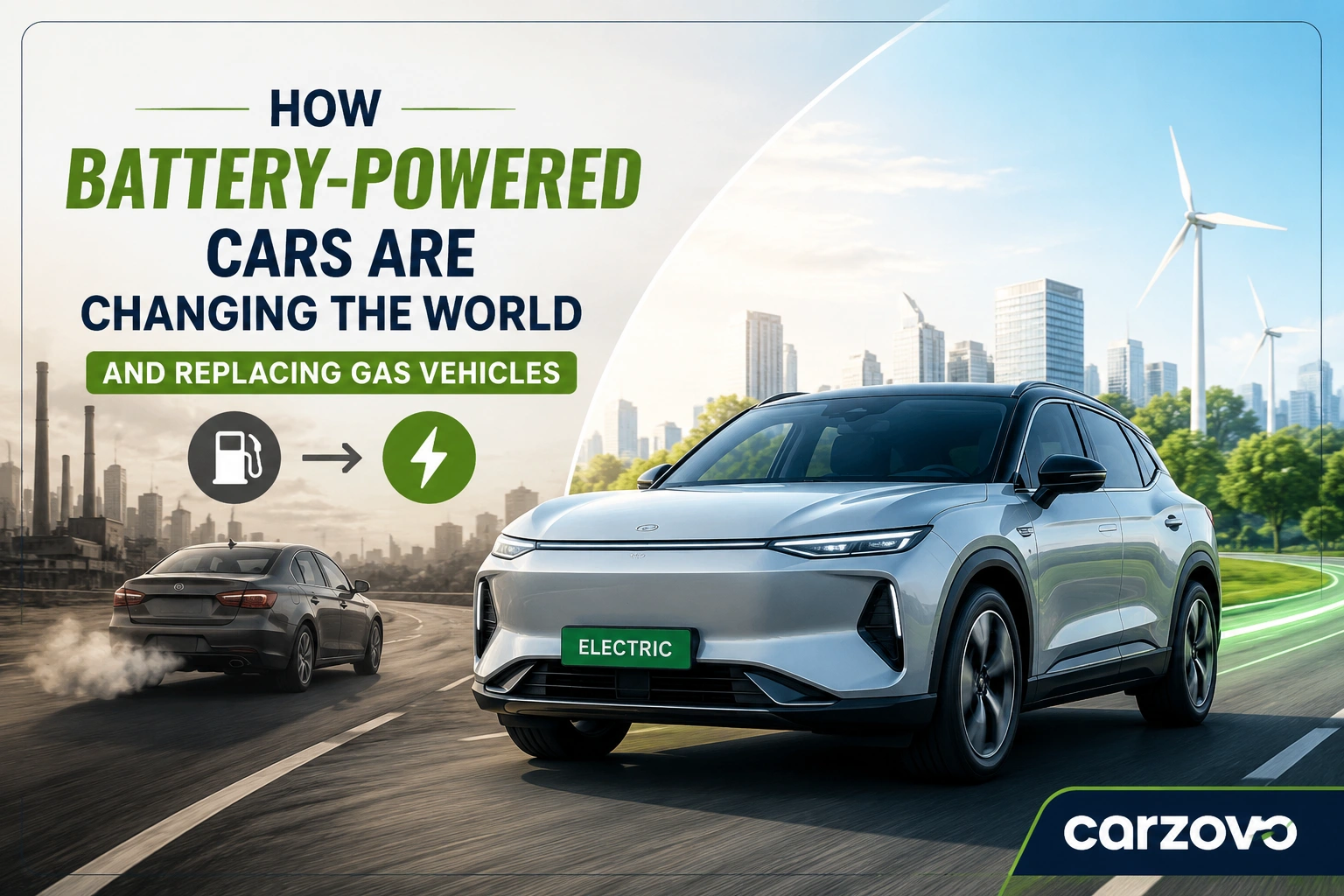
The way people drive is changing faster than it has in decades. For more than a century, petrol and diesel engines have been at the centre of personal transportation, but battery-powered cars are now challenging that dominance.
Electric vehicles were once considered expensive, limited and impractical for everyday use. That picture is changing rapidly. Better batteries, longer driving ranges, faster charging, improved technology and a growing number of electric models have made EVs a serious alternative to traditional petrol and diesel cars.
The shift is no longer just about reducing emissions. Battery-powered cars are changing the automobile industry, energy consumption, manufacturing, urban transportation and even the way drivers think about the cost of owning a car.
Electric Cars Are No Longer a Niche Product
The strongest evidence of this transition can be seen in global sales. More than 20 million electric cars were sold worldwide in 2025, meaning roughly one in every four new cars sold was electric. The IEA expects electric cars to account for around 29% of global car sales in 2026.
That is a major change from just a few years ago.
Electric cars are also becoming available in almost every major vehicle category. Buyers can now choose from compact hatchbacks, sedans, SUVs, luxury cars and performance models, while electric pickups and commercial vehicles are also expanding into new markets.
The number of electric car models available globally reached nearly 1,000 in 2025, representing about 40% of all available car models. The IEA expects more than 1,100 electric models to be available during 2026.
This wider choice is important because consumers are no longer forced to buy an EV simply because they want to be environmentally friendly. They can choose an electric car because it fits their lifestyle, performance expectations and budget.
Why Battery Power Is Replacing the Petrol Engine
A conventional petrol or diesel car relies on hundreds of moving components inside its engine and transmission. Fuel is burned to create mechanical energy, while a significant amount of energy is lost as heat.
A battery-electric car works differently. Electricity stored in the battery is sent to an electric motor, which directly converts electrical energy into motion.
This simpler powertrain brings several advantages.
Electric motors can deliver strong torque almost instantly, which is why many EVs feel particularly quick when accelerating from a standstill. They also require fewer moving mechanical components than an internal-combustion powertrain.
For drivers, this can mean smoother acceleration, quieter operation and less routine mechanical maintenance.
Battery-powered cars are therefore not simply petrol cars with a different fuel source. They represent a fundamentally different approach to vehicle design.
Batteries Are Becoming the Heart of the Automobile
The battery is the most important component of an electric car, and battery technology has improved significantly.
Modern EV batteries can provide hundreds of kilometres of driving range, while newer platforms are improving charging speed, energy density and thermal management.
Global EV battery deployment reached about 1.2 TWh in 2025, almost 30% higher than the previous year and more than seven times the level recorded in 2020.
This growing scale is important because higher production volumes can help manufacturers reduce costs and develop better battery technology.
Battery chemistry is also evolving. Different manufacturers are using technologies such as lithium iron phosphate and nickel-manganese-cobalt batteries depending on their priorities for cost, range, performance and durability.
The next stage of development is expected to focus on improving energy density, reducing the use of expensive materials, increasing charging speeds and making batteries easier to recycle.
Charging Is Becoming Part of Everyday Life
One of the biggest concerns surrounding EVs has always been charging.
Petrol cars can be refuelled in a few minutes, while charging an EV generally takes longer. However, the charging network is expanding, and home charging has changed the ownership experience for many EV users.
For a driver with access to home charging, an electric car can be plugged in overnight and start the next morning with a high state of charge. This means many EV owners do not need to visit a charging station for everyday driving.
Public charging infrastructure is also growing. In India, around 40,000 new public chargers were installed during 2024, while the PM E-DRIVE scheme allocated INR 20 billion toward charging infrastructure.
Fast-charging technology is another important development. Modern DC fast chargers can add significant range during a relatively short stop, making long-distance EV travel increasingly practical.
Charging will still need to expand considerably before EVs can provide the same convenience everywhere as petrol stations, but the infrastructure is moving in that direction.
Electric Cars Are Changing the Economics of Driving
The cost of an EV cannot be judged only by its purchase price.
Electric cars generally have fewer mechanical components that require regular servicing. There is no conventional engine oil, spark plugs or exhaust system, and regenerative braking can reduce brake wear.
Electricity can also cost less per kilometre than petrol or diesel in many markets, although the actual saving depends on local electricity and fuel prices, vehicle efficiency and charging conditions.
This is particularly important as fuel prices remain vulnerable to international oil markets.
Road transportation accounts for close to half of global oil use, according to the IEA. As more vehicles switch from petroleum to electricity, transportation becomes less directly dependent on petrol and diesel.
That does not mean EVs eliminate energy costs. Instead, they shift the energy source from liquid fuels to electricity.
EVs Are Reducing Dependence on Oil
The impact of electric cars goes far beyond individual drivers.
Every petrol car requires a continuous supply of refined fuel throughout its lifetime. An electric car primarily requires electricity, which can be generated from multiple energy sources.
This gives countries greater flexibility in how they power transportation.
In 2025, the global EV fleet avoided an estimated 1.7 million barrels of oil consumption per day.
As the electric vehicle fleet grows, this displacement could become much larger.
It also means countries that import large amounts of crude oil can potentially reduce their exposure to global oil-price fluctuations.
For India, this is particularly relevant because reducing dependence on imported fossil fuels can have implications for energy security as well as transportation costs.
Electric Cars Can Reduce Lifetime Emissions
EVs are often promoted as zero-emission vehicles, but the reality is more complicated.
A battery-powered car produces no tailpipe emissions while driving. However, emissions can occur during battery production, vehicle manufacturing and electricity generation.
The important comparison is therefore the vehicle’s entire lifecycle.
According to IEA lifecycle analysis, a medium-sized battery-electric car sold in 2023 produces around half the lifetime emissions of an equivalent conventional car running on oil-based fuel under its global policy scenario.
The environmental advantage can become larger as electricity grids increasingly use renewable and other low-carbon sources.
This means the environmental benefit of EVs depends partly on how clean the electricity used to charge them is.
China Is Showing What an Electric Car Market Can Become
China provides one of the clearest examples of how quickly electric vehicles can move into the mainstream.
More than 13 million electric cars were sold in China during 2025, and electric vehicles represented nearly 55% of new car sales.
The market has also benefited from strong domestic competition and a wide selection of models.
One particularly important development is price competitiveness. In 2025, around 70% of battery-electric cars sold in China were already cheaper than the average conventional car.
This changes the EV conversation completely.
When electric cars become cheaper or comparable to petrol cars before considering running costs, consumers have a much stronger financial reason to switch.
India Is Slowly Entering the Same Transition
India’s electric passenger-car market is still considerably smaller than markets such as China and Europe, but growth is accelerating.
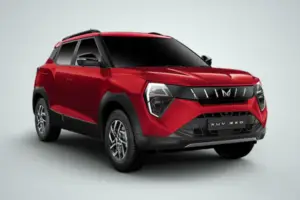
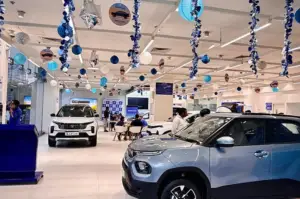
Electric passenger-car sales increased 75% in 2025 to around 165,000 units, representing nearly 4% of total car sales. Tata and Mahindra together accounted for roughly 60% of those electric car sales, while the number of electric car models available in India increased from 33 to 45.
India’s broader EV market is considerably larger because electric two-wheelers and three-wheelers are also becoming increasingly common.
This makes India’s transition somewhat different from that of developed car markets. Electric mobility is growing across multiple vehicle categories rather than being driven only by private passenger cars.
For Indian consumers, the biggest opportunities may come from lower running costs, urban commuting and the expanding availability of locally produced electric vehicles.
The Automobile Industry Is Being Completely Reshaped
The move from engines to batteries is forcing traditional car manufacturers to rethink their businesses.
For decades, manufacturers competed on engine technology, transmissions, fuel efficiency and mechanical engineering. Today, software, batteries, electric motors, charging systems and connected technology are becoming equally important.
An electric vehicle can also receive software updates that improve features or vehicle functions without traditional mechanical modifications.
This is pushing automakers to become technology companies as well as vehicle manufacturers.
The supply chain is changing too. Battery manufacturers and semiconductor companies have become strategically important, while countries are competing to establish local battery and EV manufacturing capabilities.
Global production reached nearly 22 million electric cars in 2025, with China accounting for nearly three-quarters of global electric-car production.
What Happens to Petrol and Diesel Cars?
The rise of EVs does not mean petrol and diesel cars will disappear overnight.
There are still billions of conventional vehicles on roads around the world, and many regions lack the charging infrastructure or electricity supply required for rapid electrification.
Petrol and diesel vehicles will therefore remain important for years, particularly in used-car markets, rural areas and regions where EV adoption is slower.
However, the direction of new-car sales is becoming increasingly clear.
The IEA expects electric cars to reach around 29% of global new-car sales in 2026. In its longer-term scenarios, the share of EVs in global car sales could approach 50% by 2035, while internal-combustion engine vehicle sales continue to decline.
This means the transition is likely to happen gradually, with EVs taking an increasing share of new-car sales while petrol and diesel vehicles continue to operate in the existing fleet.
The Biggest Challenges Are Still Ahead
Electric cars are not a perfect solution.
Battery production requires raw materials, mining has environmental impacts, battery recycling needs to expand and electricity grids must be prepared for increasing demand.
Charging infrastructure remains uneven, particularly outside major cities.
There is also the issue of battery replacement costs. Modern EV batteries are designed for long service lives, but replacing a large battery can still be expensive if it becomes necessary outside warranty coverage.
Cold or extremely hot weather can also affect range and charging performance.
These challenges do not necessarily stop the transition, but they show that replacing petrol cars with EVs requires more than simply producing electric vehicles. It requires investment across the entire energy and transportation system.
The Future of Cars Will Be More Electric
Battery-powered cars are already changing the automobile industry, but the transformation is still in its early stages.
Global sales have crossed the 20-million-per-year level, electric models are becoming more affordable, charging infrastructure is expanding and manufacturers are investing heavily in battery technology.
The biggest change may not be that every petrol car disappears. Instead, the definition of a normal new car is gradually changing.
For decades, buying a new car almost automatically meant choosing between petrol or diesel. That assumption is now being challenged.
As batteries become better, charging becomes faster and electric cars become more affordable, the question for consumers is increasingly shifting from “Why should I buy an EV?” to “Why shouldn’t my next car be electric?”
Battery-powered cars are therefore not simply another automotive trend. They are part of a much larger transformation in how the world produces, powers and uses transportation.