New Smart Features in Cars-
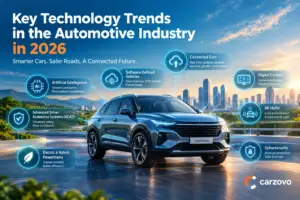
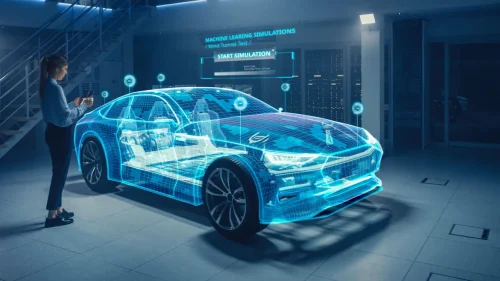
Cars today are no longer just machines that transport us from point A to point B. They have evolved into intelligent digital systems, blending automotive engineering with artificial intelligence, connectivity, automation, and advanced safety technologies.
This century marks an era where vehicles think, react, communicate, self-diagnose, and even protect their passengers better than ever.
From AI-based driver assistance to self-parking, connected tech, adaptive safety systems, and smart comfort features, today’s car buyers expect their vehicles to be smart, intuitive, and future-ready.
The modern automotive industry has shifted dramatically thanks to:
- Artificial Intelligence
- Big data analytics
- Advanced sensors
- Cloud connectivity
- Electrification
- Autonomous driving
- Predictive safety systems
Car manufacturers are no longer competing on engines alone. Instead, competition lies in:
- Tech innovation
- Advanced infotainment
- Connected car systems
- Digital driver interfaces
- Autonomous capabilities
Brands like Tata, Mahindra, Hyundai, Kia, Maruti Suzuki, Tesla, BMW, Mercedes-Benz, Toyota, and others are pushing smart features into even budget-friendly models.
The shift can be divided into three phases:
Phase 1: Digitisation (2000–2010)
– Introduction of basic infotainment
– Simple driver aids like ABS & airbags
– Keyless entry begins
Phase 2: Connected Era (2010–2020)
– Touchscreen infotainment
– Rear camera + parking sensors
– Cruise control
– Smartphone connectivity
Phase 3: Smart & Autonomous Era (2020–2025)
– Level 1 & Level 2 ADAS
– AI-based driver monitoring
– Car-to-car communication
– Over-the-air software updates
– Autonomous parking
– EV-integrated systems
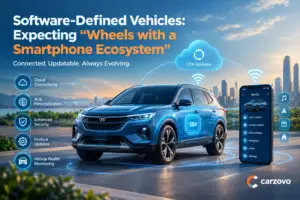
Today, cars are essentially smartphones on wheels.
2. Advanced Driver Assistance Systems (ADAS)
ADAS is the biggest leap in modern car safety. It uses sensors, radars, cameras, and AI to reduce human errors.
Key ADAS Features:
• Adaptive Cruise Control (ACC)
Maintains a safe distance from the vehicle ahead automatically.
• Lane Keep Assist & Lane Departure Warning
Detects lane markings and guides the car within the lane.
• Automatic Emergency Braking (AEB)
Applies brakes instantly to prevent collision.
• Blind Spot Monitoring
Warns the driver of hidden vehicles in side mirrors.
• Rear Cross-Traffic Alert
Detects vehicles approaching from the rear while reversing.
• Traffic Sign Recognition
Reads and displays signs like speed limits on the digital dashboard.
• Driver Monitoring System (DMS)
Monitors eye movement and alerts if the driver is drowsy.
These features combine human control with AI precision, reducing accidents significantly.
3. AI Integration: Cars Become Smarter Than Ever
Artificial Intelligence now controls major functions inside cars:
AI-Based Predictive Maintenance
The car predicts issues such as brake wear, low battery, or engine problems before failure.
AI Voice Assistants
“Hey Tata”, “Hey Mercedes”, “Hello Hyundai” — cars are now voice-controlled.
AI helps with:
- Navigation
- Climate control
- Window controls
- Playing music
- Calling contacts
- Vehicle information
AI for Real-Time Decision Making
During emergency braking, lane correction, or collision avoidance — AI reacts faster than humans.
4. Connected Car Technology (IoT)
The Internet of Things (IoT) connects your car to:
- Smartphones
- Cloud servers
- Dealerships
- Smart home devices
- Navigation systems
Popular Connected Features:
• Remote Engine Start & AC Pre-Cooling
Perfect for Indian summers — cool the cabin before entering.
• Remote Vehicle Locator
Find your car in a crowded parking area instantly.
• Live Vehicle Tracking
Parents use it to monitor their kids; fleet operators use it for business.
• Geo-Fencing Alerts
Get notifications if the car leaves a predefined area.
• Over-The-Air (OTA) Updates
Cars get new features via software updates — like smartphones.
• Real-Time Car Health Status
Shows tyre pressure, battery level, engine health, fuel levels, etc.
Connected tech is now expected even in mid-range cars.
5. Smart Safety Innovations
Safety features have gone beyond airbags and ABS. Modern cars now come with:
360-Degree Cameras
Provides a bird’s eye view — perfect for tight spaces.
Automatic Headlamps & Smart High Beam Assist
Switches between high and low beam automatically at night.
Rain-Sensing Wipers
Activates wipers based on rain intensity.
Traction Control & Stability Control
Prevents skidding during hard braking or slippery roads.
Post-Collision Braking
Stops the vehicle after initial impact to avoid secondary accidents.
Emergency SOS & Crash Alerts
Sends alerts automatically to emergency services.
Tyre Pressure Monitoring System (TPMS)
Warns instantly of low tyre pressure.
Safety tech is turning cars into protective shields for both occupants and pedestrians.
6. Smart Parking Systems
Parking is now easier thanks to:
Auto Park Assist
The car parks itself — parallel, perpendicular, or tight spaces.
Remote Smart Parking
You can stand outside while the car parks using the key or app.
Advanced Rear Cameras
With trajectory lines and obstacle detection.
Parking Distance Control
Sensors alert the driver in all directions.
These features reduce minor accidents drastically.
7. Smart Lighting Technology
Lighting systems in modern cars are intelligent:
Matrix LED & Laser Headlights
These adapt to traffic, illuminating the road without blinding others.
Adaptive Cornering Lights
Turn with the steering direction.
Dynamic Turn Indicators
Better visibility and style.
Ambient Lighting Inside Cabin
Creates a premium feel and improves night visibility.
Lighting has become a major design and safety element.
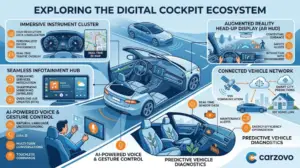
8. Smart Infotainment & Digital Cockpits
The cabin is now completely digital.
Large Touchscreens (10–15 inch displays)
Bigger, smoother, and faster interfaces.
Full Digital Instrument Cluster
Customizable themes, maps, and safety alerts.
Wireless Android Auto & Apple CarPlay
Seamless smartphone integration.
Multi-Device Bluetooth Support
Connect multiple devices simultaneously.
Premium Sound Systems
Brands like JBL, Bose, Alpine, Sony providing cinema-level experience.
9. Smart Comfort & Convenience Features
Cars today prioritize comfort using intelligent systems:
Ventilated & Heated Seats
Ideal for extreme weather conditions.
Memory Seats
Remembers seating preferences of multiple drivers.
Climate Control with Air Purifiers
Dual-zone / tri-zone AC options.
Smart Sunroof
Voice-controlled or app-controlled.
Power Tailgate with Kick Sensor
Opens boot by waving your foot under the car.
Smart Keyless Entry
Unlocks car automatically when you approach.
Comfort features now feel futuristic yet practical.
10. Electrification & Smart Battery Management in EVs
Electric Vehicles introduce a whole new range of smart technologies:
Regenerative Braking
Converts braking energy into battery power.
Smart Battery Cooling & Heating
Ensures long battery life in all weather conditions.
Fast-Charging Intelligence
Shows charging speed, time, and route to charging stations.
Range Prediction AI
Uses driving style + weather + traffic data to predict real range accurately.
Charging Scheduler
Allows charging during low electricity tariff hours.
EV-specific smart tech is revolutionizing daily driving experience.
Smart Cars Are the Future of Indian Roads–
The automotive world has entered a new era where intelligent systems, automation, and AI blend with mechanical engineering. From ADAS to connected tech, autonomous features, EV innovations, smart comfort, and safety advancements — cars today are the smartest they have ever been.
In 2025 and beyond, smart cars will dominate every segment from hatchbacks to luxury SUVs. The focus is shifting towards:
- Zero accidents
- Zero emissions
- Maximum comfort
- Intelligent mobility
Smart features are reshaping how India drives — and the future looks even more exciting.