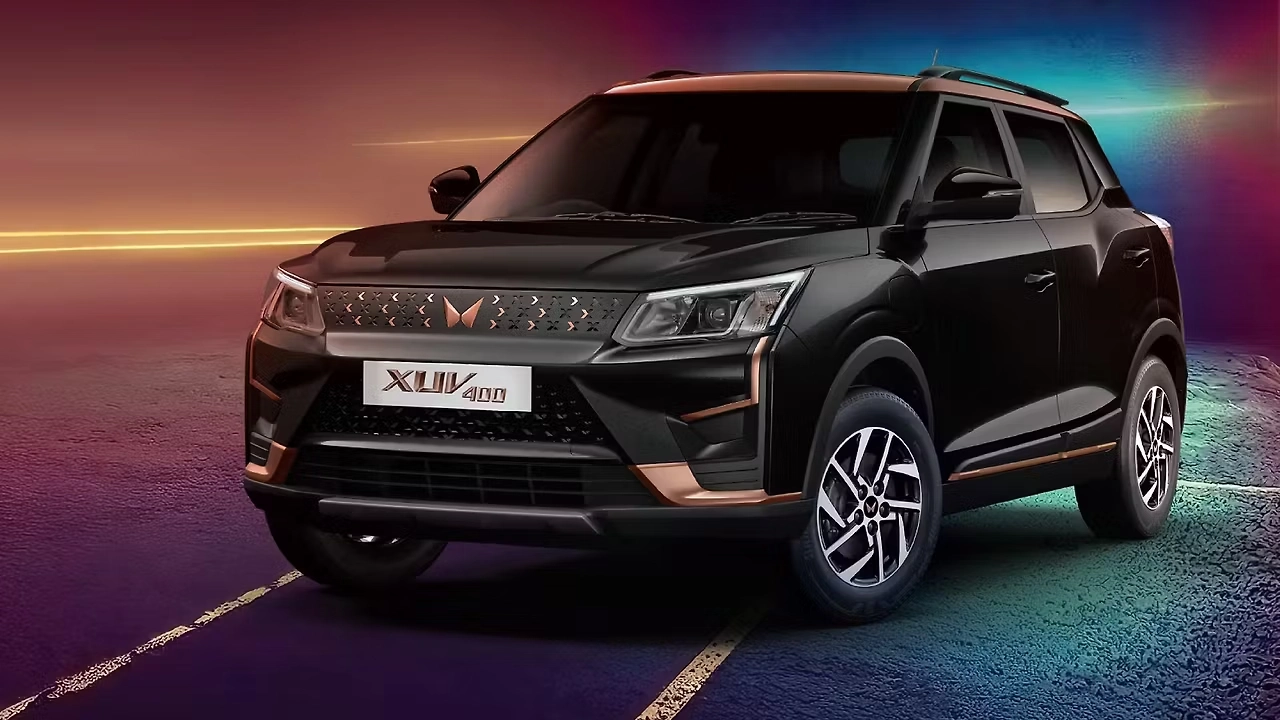
The Mahindra XUV400 was one of India’s early electric SUVs and, on paper, it still looks like a strong package. It offers a powerful 150 PS electric motor, 310 Nm of torque, a claimed range of up to 456 km and a spacious cabin.
But its market performance tells a very different story.
In June 2026, Mahindra sold just 31 units of the XUV400, down 87% year-on-year. At the same time, Mahindra sold 1,150 BE 6 units, 2,006 XEV 9e units and 4,018 XEV 9S units. More importantly, Mahindra sold 7,645 electric vehicles overall that month.
So, the problem is clearly not that buyers have stopped considering Mahindra EVs. The bigger question is: why has the XUV400 been left behind?
Mahindra XUV400 Price and Specifications
The XUV400 is positioned between compact and midsize electric SUVs. It measures 4,200 mm in length and gets a 2,600 mm wheelbase, giving it a spacious cabin and a 378-litre boot.
Depending on the variant, it gets 34.5kWh and 39.4kWh battery packs. The larger battery offers a claimed MIDC range of up to 456 km. Its electric motor produces 150 PS and 310 Nm, making it one of the more powerful EVs in its traditional price bracket.
| Specification | Mahindra XUV400 |
|---|---|
| Powertrain | Electric |
| Battery | 34.5kWh / 39.4kWh |
| Power | 150 PS |
| Torque | 310 Nm |
| Claimed range | Up to 456 km MIDC |
| Length | 4,200 mm |
| Wheelbase | 2,600 mm |
| Boot space | 378 litres |
| Drive | Front-wheel drive |
| Airbags | Up to 6 |
| Battery protection | IP67 |
The XUV400 also received the Pro update, bringing features such as a 10.25-inch touchscreen, 10.25-inch digital instrument cluster, wireless charging, rear AC vents and dual-zone climate control on applicable variants.
What the XUV400 Gets Right
The biggest strength of the XUV400 is its performance.
With 150 PS and 310 Nm, it has enough power for quick acceleration and effortless highway driving. The instant torque also makes it enjoyable in city traffic.
Its size is another advantage. The 4.2-metre body provides more cabin space than several smaller EVs, while the 378-litre boot makes it practical as a family car.
The 39.4kWh battery’s claimed 456km MIDC range also remains respectable. However, real-world range will naturally be lower depending on speed, traffic, weather and driving conditions.
Safety equipment is another positive. The XUV400 gets features such as multiple airbags, ESP, ABS with EBD, ISOFIX and four-wheel disc brakes, depending on variant.
So, technically, the XUV400 is not a weak electric SUV.
Its biggest problem is somewhere else.
The XUV400 Feels Old Compared With New EVs
The most important reason for its declining popularity is product age.
The XUV400 was introduced when India’s EV market was much smaller. At that time, a powerful motor, large battery and 400km-plus claimed range were enough to make an EV stand out.
But the market has changed rapidly.
Today’s buyers expect an electric car to offer a modern dashboard, large screens, connected technology, sophisticated software, advanced safety features and a futuristic overall experience.
The XUV400’s basic design and cabin architecture now feel older compared with newer EVs.
This is particularly important because customers spending around ₹15–18 lakh are not simply buying an electric powertrain. They are also buying technology and a feeling of owning something new.
That is where the XUV400 struggles.
Tata Nexon EV Has a Stronger Market Identity
The Tata Nexon EV has been one of the biggest challenges for the XUV400.
Tata entered the mass-market EV space early and successfully established the Nexon EV as a familiar name among Indian EV buyers.
That familiarity matters.
The Nexon EV has built a strong reputation among first-time EV buyers, while Tata has expanded its electric range with models such as the Punch EV, Curvv EV and Harrier EV.
In June 2026, Tata sold 12,023 electric cars and held around 38% of India’s electric passenger vehicle market. The Nexon EV continued to be Tata’s major EV volume driver.
This gives Tata a major advantage in terms of EV brand recognition and buyer confidence.
The XUV400 may offer stronger performance than some rivals, but the Nexon EV often feels like the more established choice.
Mahindra’s Own EVs Are Now Its Biggest Competition
Ironically, one of the biggest problems for the XUV400 is Mahindra itself.
The company’s newer born-electric SUVs, including the BE 6 and XEV 9e, have completely changed Mahindra’s EV image.
These models use a newer electric architecture and offer a much more futuristic design, cabin and technology experience.
The difference is visible in sales.
In June 2026, the BE 6 sold 1,150 units, XEV 9e sold 2,006 units and XEV 9S recorded 4,018 units. The XUV400, meanwhile, managed only 31 units.
This shows that buyers interested in Mahindra’s electric SUVs are increasingly moving toward its newer products.
The XUV400 Is Caught in an Awkward Position
Another problem is positioning.
The XUV400 is bigger than many compact EVs but does not offer the futuristic experience of Mahindra’s newer midsize electric SUVs.
This puts it in an uncomfortable middle ground.
A buyer can choose a smaller EV with newer technology or spend more on a newer Mahindra born-electric SUV with a much more advanced platform.
The XUV400 therefore lacks a clear reason to be the first choice.
It is not the cheapest EV, it is no longer the newest Mahindra EV and it does not have the strongest EV brand identity.
XUV400 vs Newer EV Competition
The competition has also become much stronger.
Indian buyers can now choose from the Tata Nexon EV, Tata Curvv EV, Tata Harrier EV, Hyundai Creta Electric, Maruti Suzuki e Vitara, Mahindra BE 6 and several other EVs.
The first half of 2026 shows just how competitive the market has become. Tata Nexon EV sold 16,567 units between January and June, while Mahindra XEV 9S sold 18,074 units, XEV 9e sold 11,242 units and BE 6 sold 6,849 units.
The XUV400 is therefore competing in a market that has moved far beyond the limited EV choices available when it was launched.
Should You Still Buy the XUV400 in 2026?
The XUV400 can still make sense if you get a good deal.
Its performance, cabin space, boot capacity and usable electric range remain genuine strengths. For a buyer who wants a practical family EV rather than the latest technology, it can still be a reasonable choice.
But the price becomes extremely important.
If the XUV400 is available with a significant discount, it becomes more attractive. However, if its final on-road price gets close to a newer-generation EV, the newer product may offer better long-term value through its design, technology and platform.
The Real Reason Why XUV400 Is So Unpopular
If there is one reason that best explains the XUV400’s poor sales, it is this:
The XUV400 became outdated faster than its product cycle.
When it arrived, its 150 PS motor, 310 Nm torque, 456km claimed range and spacious cabin made it a strong EV.
But India’s EV market evolved quickly.
Newer models now offer better technology, fresher designs, more advanced platforms and stronger market positioning.
The June 2026 numbers make the situation clear. Mahindra’s electric vehicle business is actually growing strongly, with 7,645 EVs sold in the month, yet the XUV400 contributed only 31 units.
That means buyers have not rejected Mahindra’s EV technology. They have largely moved towards newer Mahindra EV products.
Final Verdict
The Mahindra XUV400 is not a bad electric SUV. In fact, its performance, practicality and battery range remain competitive.
Its problem is that the competition has moved forward.
The Tata Nexon EV has stronger market recognition, newer EVs offer more modern technology, and Mahindra’s own BE 6 and XEV models provide a much more futuristic experience.
That leaves the XUV400 without a strong identity in today’s EV market.
So, why is the Mahindra XUV400 one of the least popular EVs in its segment?
The answer is simple: it is not necessarily bad; it simply feels older than the cars buyers can choose today.
And in India’s rapidly evolving EV market, a good battery and powerful motor are no longer enough. Buyers also want their electric SUV to feel modern, connected and future-ready.