The Indian automobile market is moving beyond traditional expectations of engine performance, mileage and exterior design. In 2026, customers are increasingly looking for vehicles that offer intelligent safety systems, connected technology, better fuel efficiency and a more advanced driving experience.
Car manufacturers are responding by introducing technologies that were once limited to expensive luxury vehicles. AI-powered features, connected vehicle platforms, advanced driver assistance systems and electrified powertrains are gradually becoming important parts of the Indian car-buying conversation.
However, not every new technology automatically becomes a customer favourite. Indian buyers continue to consider affordability, reliability, service availability, running costs and resale value before choosing a car. The most successful innovations are therefore those that combine modern technology with practical everyday benefits.
According to Deloitte’s 2026 Global Automotive Consumer Study, in-vehicle technology is an important purchase consideration for Indian consumers. The study also indicates strong interest in software-defined vehicles and AI-enabled vehicle customisation.
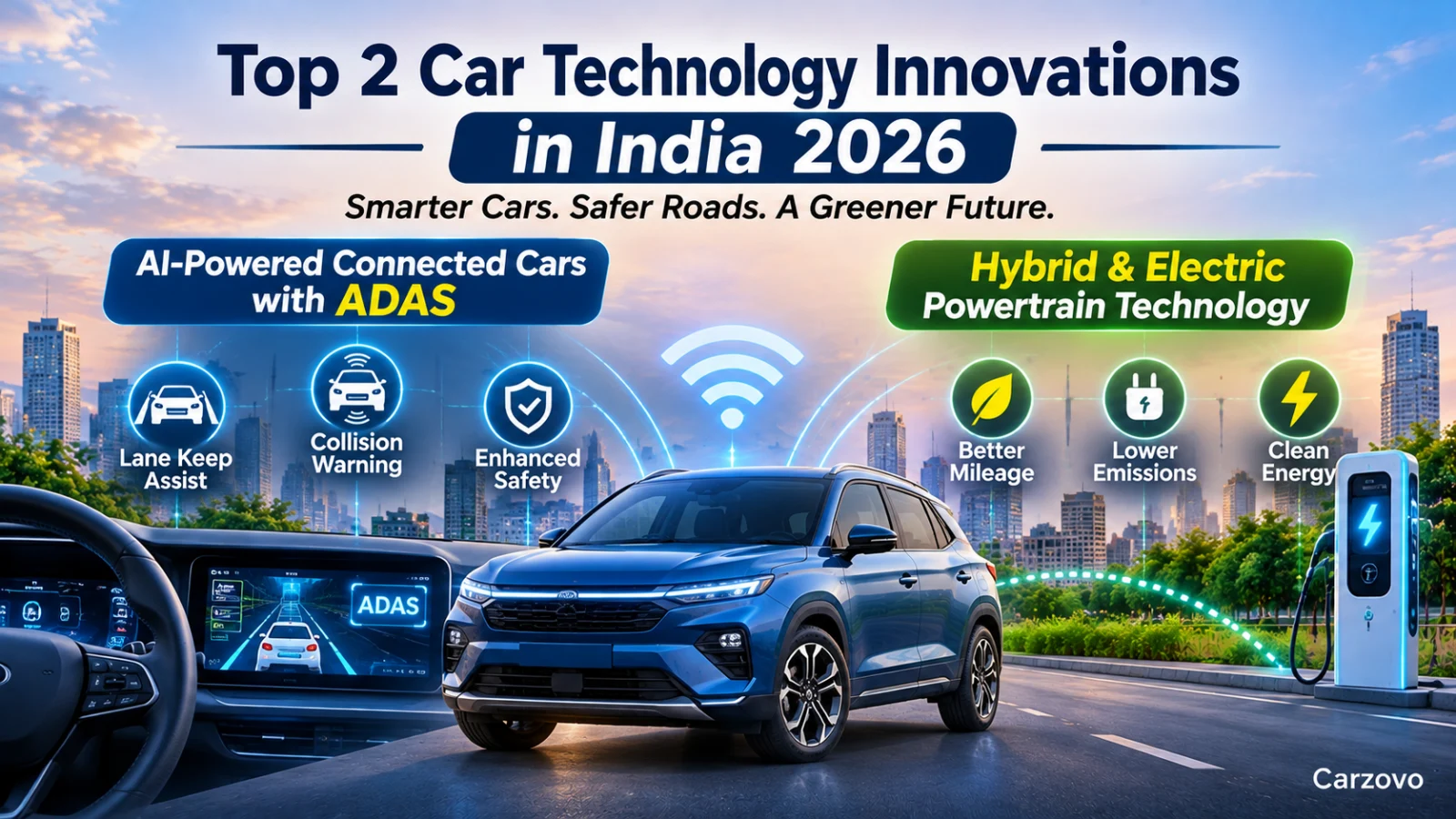
Considering customer preferences, market developments and popular vehicle choices in India, two major automotive technology innovations stand out in 2026: AI-powered connected vehicles with advanced safety systems, and next-generation hybrid and electric powertrain technology.
1. AI-Powered Connected Cars and Advanced Driver Assistance Systems (ADAS)
One of the biggest changes in the automotive industry is the transformation of cars from traditional mechanical machines into connected, software-driven vehicles.
Modern cars are increasingly equipped with digital systems that can communicate with drivers, monitor vehicle conditions, provide real-time information and assist with certain driving operations. This development is closely connected to the concept of Software-Defined Vehicles (SDVs).
In simple terms, a software-defined vehicle is a car whose functions and features are controlled or improved through software. Instead of relying only on fixed mechanical and electronic systems, manufacturers can use software updates to improve selected vehicle functions over time.
What makes connected cars different in 2026?
Earlier, buyers mainly evaluated cars based on engine capacity, mileage, transmission, seating comfort and safety ratings. These factors remain important, but customers are now paying greater attention to the technology available inside the cabin.
Some of the major features shaping connected vehicles include:
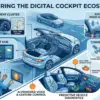
AI-powered voice assistants: Modern voice assistants allow drivers to interact with vehicle systems using natural language. Depending on the car and its software, drivers may be able to control navigation, music, climate settings and other functions through voice commands.
Over-the-air (OTA) updates: OTA technology allows manufacturers to deliver selected software updates remotely. Depending on the vehicle architecture, updates may improve infotainment, connectivity, navigation and certain electronic functions without requiring a traditional workshop visit.
Connected vehicle applications: Smartphone applications can help owners check vehicle location, monitor selected vehicle information, access remote functions and receive service-related notifications.
Digital instrument clusters: Large digital displays provide information such as speed, navigation directions, driving assistance alerts, energy consumption and vehicle status.
AI-based personalisation: Some advanced systems can learn or store driver preferences and adjust selected settings. The availability of these functions varies between manufacturers and vehicle models.
ADAS: Making everyday driving smarter and safer
Advanced Driver Assistance Systems, commonly known as ADAS, are another important part of this technology shift.
ADAS uses cameras, radar sensors and other detection systems to monitor the surroundings of a vehicle. Depending on the system, it can warn the driver about potential hazards or assist with selected driving operations.
Some commonly available ADAS functions include:
- Forward Collision Warning: Alerts the driver when a potential front-end collision is detected.
- Automatic Emergency Braking: Can apply braking in certain situations if the driver does not respond in time.
- Lane Keeping Assist: Helps the vehicle remain within its detected lane under suitable conditions.
- Adaptive Cruise Control: Maintains a selected speed and can adjust the distance from the vehicle ahead.
- Blind Spot Monitoring: Warns the driver when another vehicle is detected in a blind spot.
- Rear Cross-Traffic Alert: Helps detect approaching traffic while reversing, where supported.
- Traffic Sign Recognition: Identifies certain road signs and displays relevant information.
These systems are particularly useful on highways and during long-distance journeys. However, they do not make a car self-driving. Drivers must remain attentive and ready to take control.
Why Indian customers are showing interest in this technology
Safety and convenience are becoming important factors in vehicle selection. Buyers increasingly expect modern cars to provide more than basic airbags and parking sensors.
Deloitte’s 2026 consumer study highlights that Indian customers are willing to pay for software-defined vehicle capabilities, including safety, security and continuous vehicle-health information. It also reports strong interest in AI-enabled vehicle customisation.
This indicates that connected technology is not simply an entertainment feature. Customers are increasingly interested in technology that can improve vehicle safety, ownership experience and convenience.
Cars bringing advanced technology to Indian customers
Several manufacturers are introducing connected features and driver assistance technology across different vehicle categories.
Mahindra XEV 9e and BE 6: These electric SUVs represent the growing use of digital interfaces, connected features and advanced electronic vehicle systems in the Indian market. Their technology-focused cabins and electric platforms make them notable examples of the shift towards software-led mobility.
Tata Harrier EV: The Harrier EV brings an electric powertrain together with a modern digital cabin and connected vehicle features. It represents the expansion of advanced electric technology into the larger SUV segment.
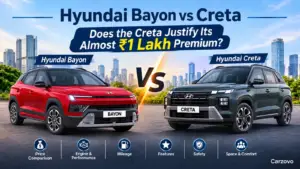
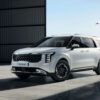
Hyundai models with ADAS: Hyundai has been expanding driver assistance technology across its Indian portfolio. Selected variants of models such as the Creta and other premium offerings provide features designed to improve driving assistance and convenience.
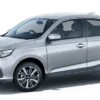
Honda City and Honda Elevate: Selected variants of these models offer Honda Sensing technology, which includes driver assistance functions such as collision mitigation and lane-related assistance. Feature availability depends on the model and variant.
The important point for customers is to check the exact variant before purchasing. A manufacturer may advertise ADAS or connected technology for a model, but the complete feature package may only be available in selected higher trims.
How this technology benefits different car segments
| Car segment | Technology customers may value |
|---|---|
| Hatchbacks | Smartphone connectivity, touchscreen infotainment and rear parking assistance |
| Compact SUVs | Connected applications, cameras and selected ADAS functions |
| Mid-size SUVs | Larger displays, digital cockpits, connected services and advanced safety assistance |
| Premium SUVs | More comprehensive ADAS, OTA capabilities and advanced driver interfaces |
| Luxury cars | AI-assisted systems, advanced driver support and integrated digital ecosystems |
Challenges that still need attention
Despite its benefits, connected vehicle technology has some limitations.
First, advanced features can increase the price of a vehicle. Second, drivers may become overly dependent on assistance systems. Third, connected vehicles require proper cybersecurity and protection of personal data.
There is also a difference between having a feature and having a system that works reliably in real-world Indian traffic. Poor lane markings, unpredictable road behaviour, weather conditions and dense traffic can affect the performance of certain ADAS functions.
For this reason, customers should evaluate the actual performance and usability of these systems rather than selecting a vehicle only because it has a long list of technology features.
2. Next-Generation Hybrid and Electric Powertrain Technology
The second major innovation influencing Indian car preferences in 2026 is the development of hybrid and electric powertrains.
For many years, petrol and diesel engines dominated the Indian passenger vehicle market. However, rising interest in fuel efficiency, lower running costs and alternative energy technologies has encouraged manufacturers to develop different types of electrified vehicles.
Hybrid cars and battery electric vehicles are now becoming more visible across hatchbacks, SUVs and premium MPVs.
The important development is that customers are no longer looking at electrification as a technology limited to expensive luxury vehicles. More manufacturers are introducing electric models and improving battery technology, while hybrid systems are attracting customers who want better fuel efficiency without depending entirely on public charging infrastructure.
How hybrid technology works
A hybrid vehicle combines a conventional internal combustion engine with an electric motor and battery.
Depending on the type of hybrid system, the electric motor can assist the engine, power the vehicle at low speeds or support acceleration. Regenerative braking can recover some energy during deceleration and store it in the battery.
There are different types of hybrid systems.
Mild Hybrid: A small electric motor assists the engine during selected operating conditions. It generally cannot drive the vehicle independently for extended distances.
Strong Hybrid: The vehicle uses both an engine and an electric motor. Depending on the design and driving conditions, it can operate using electric power alone for short periods.
Plug-in Hybrid: A plug-in hybrid has a larger battery that can be charged externally. It can generally travel a longer distance in electric-only mode than a conventional strong hybrid.
For Indian buyers, strong hybrid technology is particularly relevant because it can improve fuel efficiency without requiring regular external charging.
Why hybrid cars are attracting customer attention
Hybrid vehicles offer a practical combination of conventional refuelling convenience and electric assistance.
Customers do not need to plan every journey around charging stations. At the same time, the electric motor can help reduce fuel consumption, particularly in suitable urban driving conditions.
Deloitte’s 2026 study identifies hybrids as an important transition technology for Indian consumers considering their next vehicle. This reflects the interest of buyers who want improved efficiency but may not yet be ready to switch completely to an electric car.
Popular hybrid cars in India
The following models illustrate customer interest in the strong-hybrid segment. Their sales figures are from FY2026, rather than a ranking of November 2026 sales.
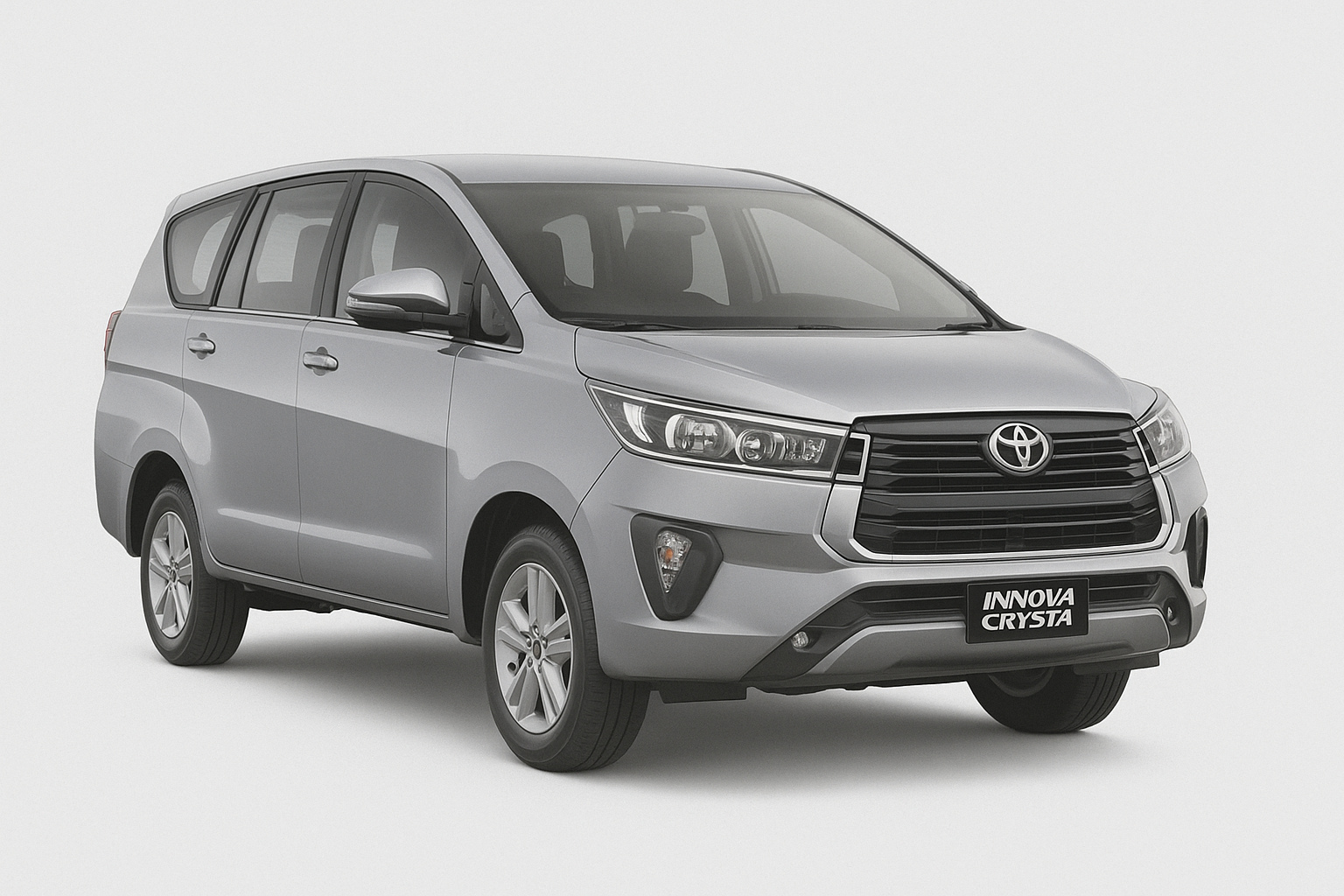
Toyota Innova Hycross Hybrid
The Innova Hycross has become an important choice in the hybrid MPV category. Its strong-hybrid powertrain combines a petrol engine with an electric motor to deliver a balance of performance and fuel efficiency.
It is particularly relevant for customers looking for a spacious family vehicle with three-row seating.
Toyota Urban Cruiser Hyryder Hybrid
The Hyryder is a strong-hybrid SUV designed for customers who want SUV styling along with improved fuel efficiency.
Its hybrid system is especially attractive to urban buyers who regularly drive in stop-and-go traffic.
Maruti Suzuki Grand Vitara Strong Hybrid
The Grand Vitara shares its strong-hybrid technology with the Toyota Hyryder. It combines an SUV-style design, practical cabin and fuel-efficient powertrain.
These models demonstrate that hybrid technology is gaining acceptance in more than one vehicle category.
Electric vehicle technology is moving forward
While hybrids provide an intermediate option, battery electric vehicles represent a more complete shift away from conventional petrol and diesel engines.
An electric vehicle uses a battery pack to supply energy to an electric motor. Unlike conventional vehicles, it does not require an internal combustion engine to generate power for driving.
The latest generation of electric cars is focusing on improvements in battery capacity, driving range, charging speed, power delivery and connected vehicle technology.
Some important developments include:
Improved battery technology: Manufacturers are working on battery systems that offer better energy density, thermal management and durability.
Regenerative braking: Electric motors can recover energy during deceleration and send it back to the battery, helping improve overall efficiency.
Fast charging: Modern EV platforms support higher charging speeds, although actual charging time depends on the vehicle, charger capacity, battery temperature and charging conditions.
Battery management systems: These systems monitor battery temperature, voltage and operating conditions to support safe and efficient performance.
Vehicle-to-load capabilities: Selected electric vehicles can supply power to compatible external devices. The exact output and supported equipment depend on the model.
Which electric cars are attracting Indian customers?
The first half of 2026 provides a useful picture of customer interest in India’s electric passenger vehicle market.
According to reported H1 2026 sales figures, the MG Windsor EV remained among the leading electric cars, while the Mahindra XEV 9S, Tata Nexon EV and Tata Punch EV also recorded significant customer interest.
MG Windsor EV
The Windsor has attracted attention in the electric crossover segment with its spacious cabin, comfortable seating and practical family-oriented design.
It is an example of how electric vehicles are moving beyond small city cars into more spacious passenger vehicles.
Mahindra XEV 9S
The XEV 9S represents the growing presence of electric SUVs in the Indian market. Its large-format SUV design and technology-focused cabin appeal to customers looking for a premium electric vehicle experience.
Tata Nexon EV
The Nexon EV remains an important model in India’s electric SUV market. It combines a familiar compact SUV format with an electric powertrain, making it relevant for buyers considering a switch from petrol or diesel vehicles.
Tata Punch EV
The Punch EV brings electric mobility into the compact SUV category. Its size and city-friendly format make it an option for customers who want an electric vehicle for daily commuting.
Hybrid vs Electric: Which technology should customers choose?
Both technologies offer advantages, but the right choice depends on driving habits, budget and access to charging facilities.
| Buying consideration | Strong Hybrid | Battery Electric Vehicle |
|---|---|---|
| Main power source | Petrol engine and electric motor | Battery and electric motor |
| External charging | Generally not required | Required |
| Fuel requirement | Petrol | Electricity |
| City driving | Efficient in suitable conditions | Can offer low running costs |
| Long-distance travel | Conventional refuelling convenience | Requires charging planning |
| Maintenance | Includes engine and hybrid components | Fewer conventional powertrain components |
| Best suited for | Buyers wanting efficiency with familiar refuelling | Buyers with suitable charging access and predictable usage |
The choice should not be based only on claimed mileage or driving range. Customers should also calculate the purchase price difference, electricity or fuel costs, insurance, charging access, service support and expected ownership period.
Why EV sales matter in the 2026 customer preference discussion
The sales performance of electric cars shows that customer interest is moving beyond curiosity.
In the first half of 2026, MG Windsor EV led the electric passenger vehicle sales list, followed by the Mahindra XEV 9S and Tata Nexon EV. Tata Punch EV also recorded strong growth compared with the same period in 2025.
These figures indicate that electric technology is attracting buyers across different vehicle sizes and price categories.
However, EV adoption is not uniform across India. Charging infrastructure, apartment parking arrangements, highway charging availability and local electricity costs can influence the ownership experience.
For customers who do not have convenient charging access, a strong hybrid may remain a more practical option.
Which Two Innovations Are Most Relevant to Indian Car Buyers in 2026?
Both innovations are changing the way people evaluate cars, but they solve different customer requirements.
| Customer requirement | Relevant technology | Example models |
|---|---|---|
| Better driving assistance | ADAS | Selected Hyundai, Honda, Tata and Mahindra models |
| Connected cabin experience | Software-defined vehicle technology | Mahindra XEV 9e, BE 6 and other connected models |
| Improved fuel efficiency | Strong Hybrid | Toyota Hyryder, Grand Vitara, Innova Hycross |
| Lower dependence on petrol and diesel | Battery Electric Powertrain | MG Windsor EV, Tata Nexon EV, Mahindra XEV 9S |
| Digital vehicle features | Connected car technology | Selected models across SUV and premium segments |
There is no single technology that is best for every buyer. A customer purchasing a compact SUV for city use may prioritise connected features and parking assistance, while a family travelling long distances may prefer a strong hybrid. A buyer with home charging access may find an electric vehicle more suitable.
What Can Customers Expect From Automotive Technology in 2027 and Beyond?
The developments seen in 2026 are likely to influence the next generation of Indian cars.
Software-defined vehicles may become more advanced, with manufacturers introducing improved digital interfaces, remote diagnostics, personalised settings and additional connected services.
ADAS may also become more accessible as manufacturers expand driver assistance features into lower vehicle categories. However, real-world performance, affordability and driver awareness will remain important.
Battery technology and charging infrastructure will continue to influence the electric vehicle market. Better thermal management, improved battery efficiency and more convenient charging solutions could make EV ownership easier for a wider group of customers.
Hybrid technology may also remain relevant for buyers who want improved fuel efficiency without depending on external charging.
The future will therefore not be based on one powertrain or one digital feature. Instead, manufacturers will need to offer a combination of safety, efficiency, affordability and useful technology.
Final Verdict: Technology Is Becoming a Major Part of Car Buying in India
The Indian automobile market in 2026 is experiencing two important shifts.
First, customers are showing greater interest in connected vehicles, software-defined systems, AI-powered features and ADAS. These technologies are changing the driving experience by adding digital convenience and assistance.
Second, hybrid and electric powertrains are giving customers more options beyond conventional petrol and diesel engines. Strong hybrids offer a practical transition, while EVs are expanding into more vehicle categories.
The most successful cars will not necessarily be those with the largest screens or the longest feature list. They will be vehicles that use technology to solve real customer problems.
For Indian buyers, the ideal car in 2026 is one that combines useful safety features, reliable performance, manageable ownership costs and technology that makes everyday driving easier.