Y43 Maruti Micro SUV 2026 – Big Strategy Shift Towards SUVs
The Indian car market has undergone a massive transformation in recent years, and one of the most noticeable changes is the dominance of SUVs across all price segments. Buyers who once preferred hatchbacks are now leaning towards vehicles that offer a commanding driving position, better road presence, and a more rugged design. This shift has pushed even the most hatchback-focused brands to rethink their strategies, and this is exactly where the Maruti Micro SUV 2026 comes into focus. Developed by Maruti Suzuki, this upcoming model reflects the brand’s calculated move towards high-demand SUV segments, aiming to capture a new generation of buyers looking for affordability with a true SUV experience.
The discontinuation of the Ignis is a clear signal that Maruti is no longer interested in experimenting with niche hatchback designs that struggle to find mass acceptance. Instead, the company is focusing on building products that align with current market demand. The upcoming micro SUV, internally codenamed Y43, is one of the most important steps in this direction. It is being designed specifically to attract entry-level SUV buyers who want affordability without compromising on the SUV feel.
What Exactly is the Maruti Y43 Micro SUV?
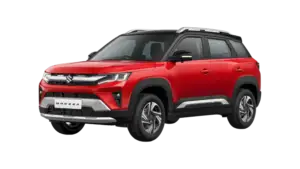
The Maruti Y43 is not just another small car with a raised stance; it is being developed as a proper micro SUV that fits perfectly between entry-level hatchbacks and compact SUVs. This positioning is crucial because the segment has seen explosive growth thanks to cars like Tata Punch and Hyundai Exter, which have proven that there is strong demand for affordable SUVs in India.
Unlike the Ignis, which carried a quirky and somewhat polarizing design language, the new micro SUV is expected to adopt a more universally appealing look. Maruti understands that design plays a major role in buying decisions, especially in the SUV segment, where road presence often matters as much as performance or features. The Y43 is therefore expected to deliver a more aggressive and bold stance that resonates with a wider audience.
This new model will also play a strategic role in Maruti’s lineup by sitting below the Maruti Suzuki Brezza and Maruti Suzuki Fronx, ensuring that the company has a strong presence across all SUV price bands.
Expected Launch Timeline and Market Entry
The launch timeline of the Maruti micro SUV is being closely watched because it will determine how quickly the company can capture market share in this highly competitive segment. Current expectations suggest that the vehicle will make its debut sometime between late 2026 and early 2027.
This timing is not accidental. By that period, the micro SUV segment is expected to become even more competitive, with existing players strengthening their offerings and new entrants joining the race. Maruti’s approach appears to be focused on entering the segment with a well-developed and thoroughly tested product rather than rushing to market. This strategy has worked in the past for models like the Brezza, and the company is likely to follow a similar path here.
Expected Pricing Strategy in India
Pricing will be one of the most critical factors determining the success of the Maruti Micro SUV 2026 Y43. Maruti Suzuki has built its reputation on delivering value-for-money products, and the upcoming micro SUV is expected to follow the same philosophy.
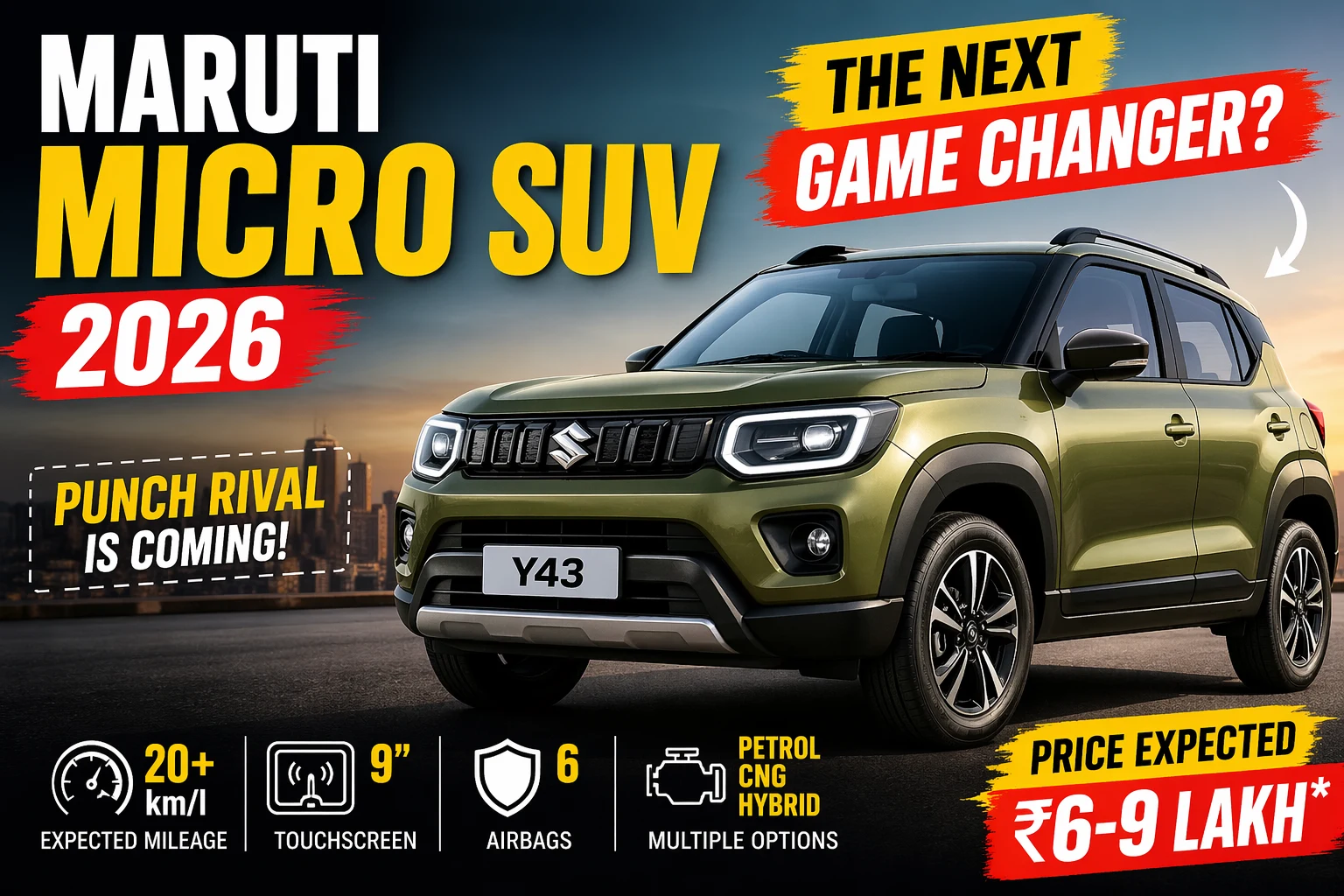
The expected price range is likely to start from around ₹6 lakh and go up to ₹9 lakh (ex-showroom), which puts it directly in competition with the Tata Punch and Hyundai Exter. However, Maruti may adopt a slightly aggressive pricing strategy for the base variants to attract first-time buyers and those upgrading from entry-level hatchbacks.
This pricing approach is important because the target audience for this car is extremely price-sensitive. Even a small difference in cost can influence buying decisions, especially in the entry-level segment. By offering competitive pricing combined with better fuel efficiency and lower maintenance costs, Maruti aims to create a strong value proposition that rivals will find difficult to match.
Engine Options and Driving Experience
The engine lineup of the Maruti Y43 is expected to be versatile, catering to a wide range of buyers with different priorities. The base engine is likely to be a 1.2-litre petrol unit, possibly from the newer Z-series family, which is designed to offer improved fuel efficiency and smoother performance.
For buyers who prefer a more spirited driving experience, Maruti could introduce a turbocharged petrol variant, although this may be limited to higher trims. Such an option would help the brand appeal to younger buyers who want a balance between efficiency and performance.
In addition to petrol variants, a factory-fitted CNG option is almost certain, given the increasing demand for low running cost vehicles in India. Maruti has consistently led the CNG segment, and including this option will significantly expand the car’s appeal among budget-conscious customers.
There is also speculation about hybrid technology being offered, at least in mild-hybrid form, to further enhance fuel efficiency. While a fully electric version may not be available at launch, the platform could be adapted for an EV in the future as part of Maruti’s long-term electrification plans.
Mileage Expectations and Efficiency Advantage
Fuel efficiency has always been one of Maruti Suzuki’s strongest selling points, and the Y43 is expected to continue that tradition. The petrol variants are likely to deliver mileage figures in the range of 20 to 23 km/l, which would make it one of the most efficient vehicles in its segment.
The CNG variant, if introduced, could offer even higher efficiency, potentially exceeding 26 km/kg. This would make the car particularly attractive to buyers who use their vehicles for daily commuting and are looking to minimize fuel expenses.
In a market where rising fuel prices continue to influence buying decisions, this focus on efficiency could give Maruti a significant advantage over competitors.
Design Evolution: From Quirky to Bold SUV Styling
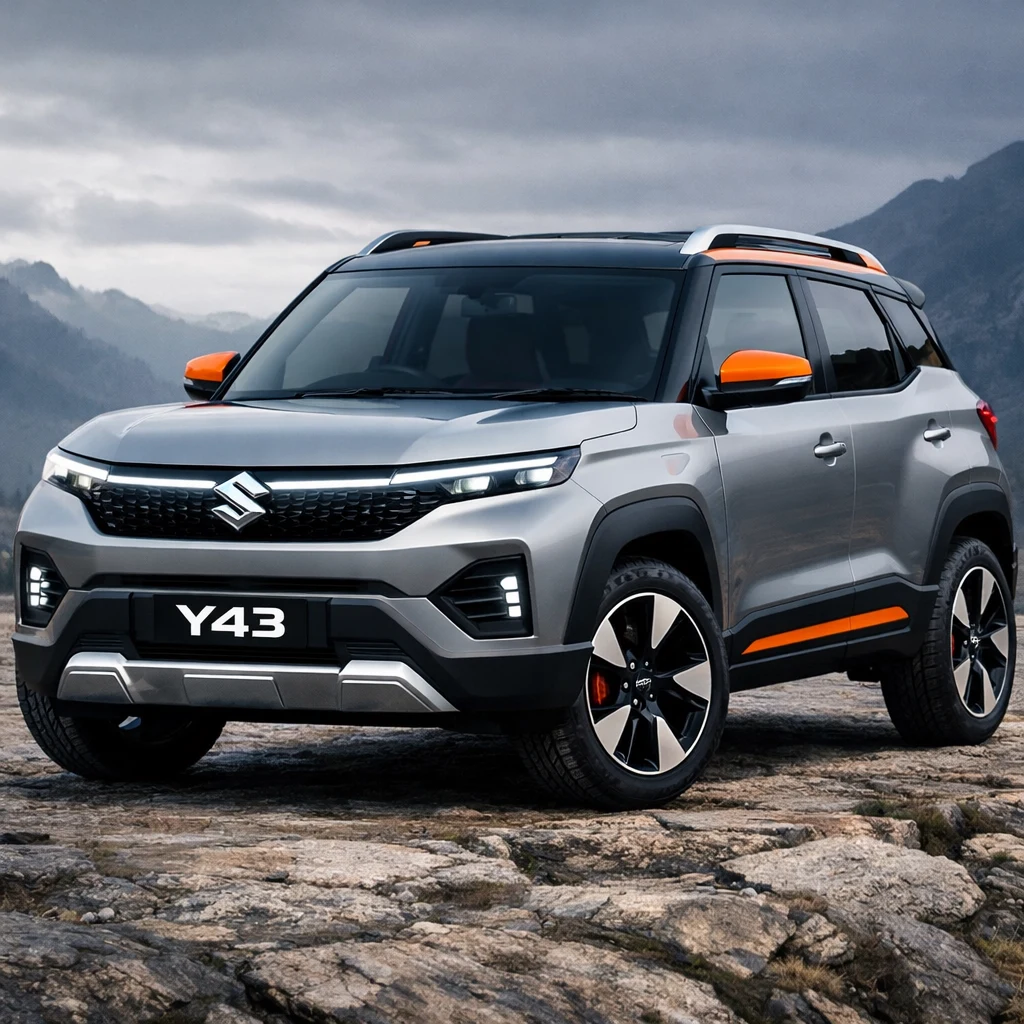
One of the biggest criticisms of the Ignis was its unconventional design, which limited its appeal despite having strong mechanicals. Maruti seems to have learned from this experience and is expected to take a completely different approach with the Y43.
The new micro SUV is likely to feature a bold front fascia, a prominent grille, and high ground clearance, all of which contribute to a strong SUV identity. The inclusion of LED lighting elements, roof rails, and muscular wheel arches will further enhance its visual appeal.
The overall design philosophy is expected to align with modern SUV trends, ensuring that the car looks premium and rugged at the same time. This change alone could significantly improve its acceptance in the market compared to its predecessor.
Maruti Micro SUV 2026 – Interior Experience and Feature Upgrades
Inside the cabin, the Maruti Micro SUV 2026 Y43 is expected to offer a much more premium experience than what was seen in the Ignis. The focus will be on creating a modern and tech-friendly environment that appeals to younger buyers.
A large touchscreen infotainment system with wireless smartphone connectivity is almost certain, along with a digital instrument cluster that adds a futuristic touch to the dashboard. The use of better materials and improved fit and finish will also play a crucial role in enhancing the overall cabin experience.
Comfort features such as automatic climate control, push-button start, and possibly even a sunroof in higher variants will help the car compete effectively with rivals like the Hyundai Exter, which is known for its feature-rich offering.
Safety Improvements and Market Expectations
Safety has become a major consideration for Indian buyers, and Maruti Suzuki has been gradually improving its offerings in this area. The Maruti Micro SUV 2026 Y43 is expected to come equipped with essential safety features such as airbags, ABS with EBD, and electronic stability control.
There is also a possibility that Maruti will standardize six airbags across variants, following recent regulatory trends and increasing consumer awareness. This would be a significant step forward and help the brand compete more effectively with Tata, which has built a strong reputation for safety.
Competition and Segment Battle
The micro SUV segment is already highly competitive, with established players like the Tata Punch and Hyundai Exter dominating sales charts. The Punch is known for its strong build quality and safety credentials, while the Exter focuses on offering a premium feature set.
The Maruti Micro SUV 2026 (Y43) will need to strike a balance between these two approaches. By combining efficiency, affordability, and a wide service network, Maruti has the potential to carve out a strong position in the segment.
Why Ignis Was Replaced
The decision to phase out the Ignis was not sudden but rather the result of consistent underperformance in terms of sales. While the car had its strengths, including a reliable engine and compact dimensions, it failed to connect with mainstream buyers.
At the same time, the rapid rise of SUVs made it clear that Maruti needed to invest more in this segment. The Y43 is therefore not just a replacement but a complete reinvention of Maruti’s approach to entry-level cars.
Future Outlook and Market Impact
Looking ahead, the Maruti Micro SUV 2026 could become a key volume driver for the company, much like the WagonR and Swift have been in the past. If the pricing and features are aligned correctly, it has the potential to dominate the segment and attract a large number of buyers.
The model could also serve as a foundation for future innovations, including electric variants and export opportunities. This makes it one of the most strategically important launches for Maruti Suzuki in the coming years.
Final Verdict
The upcoming Maruti Micro SUV 2026 is shaping up to be a game-changer in the entry-level SUV segment. It combines everything that Indian buyers are currently looking for, including affordability, efficiency, modern features, and a strong SUV presence.
For buyers planning to purchase a car in the ₹6–10 lakh range, waiting for this model could be a smart decision. It promises to deliver the reliability of Maruti Suzuki along with the practicality and appeal of an SUV, making it one of the most anticipated launches in the Indian automotive market.